Iraq

As Iraq struggles to come to terms with multiple legacies of conflict and repression, we support victims, survivors and civil society to push for truth, justice and reparation.

Protest for the missing and disappeared in Iraq, 2023 © Al Haqq

Iraq has suffered repeated cycles of violence and instability in recent history. Many of Iraq’s initiatives to serve justice and redress to victims have fallen short. This has been due to politicisation, sectarianism, corruption and selective approaches that punish some perpetrators while others enjoy impunity, or recognise some victims’ suffering while ignoring others.

We believe a more even-handed approach is needed to help Iraq overcome past traumas and prevent new grievances leading to more conflict.

We therefore support a diverse range of victims – from the ISIS conflict and from the repression of the 2019 Tishreen protest movement, and from across the country’s diverse geography – and their allies to demand justice that works for all. We do so via research, campaigning, and engagement with policymakers. Throughout, we remain aware of gendered power imbalances and endeavour to foreground women’s voices.

Our work in Iraq focuses on two key areas: the legacies of the ISIS occupation and conflict, and of the repression of the pro-reform Tishreen protest movement. We do this by:

Supporting victim and survivor-led groups, as well as their allies in civil society, to organise, mobilise and express their demands to those in power

Connecting different groups of victims and survivors to build support for collective action on topics of joint concern, notably action to address the issue of missing and disappeared persons

Engaging with policymakers to share lessons learned from dealing with the past processes elsewhere and push for uptake of our partners’ demands

In recent history, Iraq has suffered repeated cycles of violence, repression, dictatorship, genocide, foreign intervention and instability.

The Baathist regime ruled the country from 1968 until its overthrow by a US-led coalition in 2003, precipitating a period of sectarian conflict and the collapse of institutions.

In 2013, following the rise of ISIS and subsequent intervention by the Iraqi government and its allies, the country’s human rights and security crises deteriorated. Numerous human rights violations were committed by ISIS, notably its genocide against the Yazidis. There were also reports of torture, forcible disappearances and killings perpetrated by Iraqi government forces and allied armed groups during their liberation of territory from ISIS.

While ISIS has been formally defeated, it left behind social and physical devastation. To date, Iraq lacks a clear and comprehensive long-term strategy to deal with past abuses and the real needs of victims.

Policies to deal with the fallout from these cycles of violence have been selective and highly politicised, favouring certain groups at the expense of others, and encouraging retributive or revenge-based approaches that create new cycles of grievance and threaten future stability and peace.

This proved true once again with the outbreak of the youth-led 2019 Tishreen protest movement, which demanded root and branch reform to the failing systems put in place since 2003, but was brutally repressed by government forces and armed groups. Little progress has been made to hold accountable the perpetrators or to compensate those affected.

There remains an urgent need for comprehensive and victim-centred justice measures to halt Iraq’s repeated cycles of violence, victimisation, grievance and revenge.

To ensure impunity is addressed holistically, Impunity Watch works with different Iraqi groups that experience violence to organise, strategise, and advocate for truth, justice and redress.

We focus on areas where we have expertise and can bring added value to addressing impunity, such as working with women and young people.

“If perpetrators are not held accountable through fair trials, you or your children might be the victims in the future.”
Impunity Watch logo
Basma Al Dakhi, Yazidi survivor and peace mediator in northern Iraq
In focus

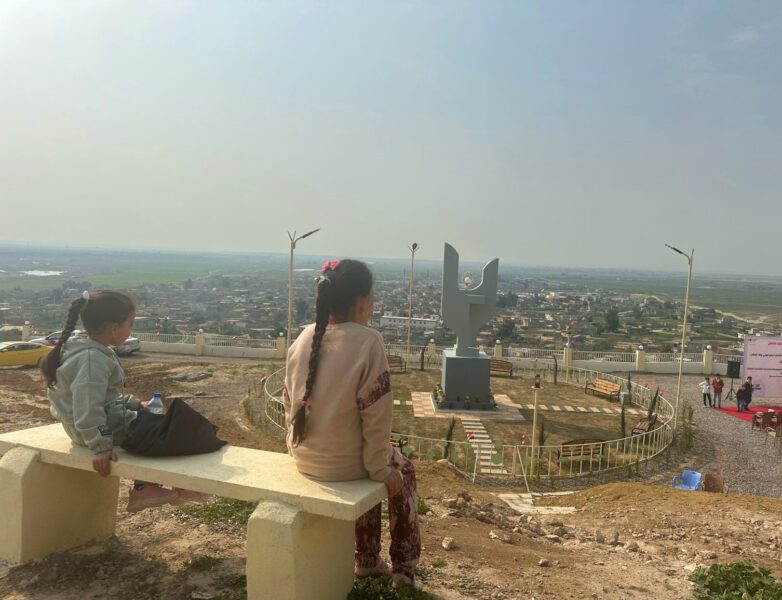
Memorial garden for the disappeared

Memory initiatives are important for confronting a violent past and seeking transformative justice.

In southern Mosul, victims created a new memorial garden for the disappeared. The memorial offers a space for communities to come together, grieve and to advocate for truth and justice. It also educates new generations about painful events in the country’s history.

Read more

Latest news from Iraq