Artificial Intelligence and Transitional Justice

Harnessing the benefits, preventing further harms

Report: Mapping AI use in TJ
Hanna Barakat & Archival Images of AI + AIxDESIGN / CC-BY 4.0

Artificial Intelligence (AI) is already used in transitional justice contexts, primarily to process, organise, map and analyse data from diverse sources and analyse patterns of human rights violations or systemic violence.

In the near future, AI could potentially play a hugely positive role in transitional justice contexts by, for example, ensuring victim-centred approaches and survivor-empowerment are embedded in justice mechanisms and enabling highly-efficient collation and assessment of evidence, such as witness testimony and weapons tracking.

On the other hand, harms posed by AI design and use can be exacerbated in transitional justice settings, particularly in conflict/post-conflict zones or post-authoritarian environments. In these contexts, AI can be used to target survivors, destabilise the information sphere through mis- and disinformation, and potentially impact truth-telling and derail peacebuilding efforts.

Despite these substantial potential benefits and risks, there is very little research into how AI can best be used to further transitional justice goals in societies that are facing violent conflict and/or serious, widespread human rights abuses.

While lessons can be learned from research into AI use in other human rights and humanitarian fields, large-scale atrocities that occur during violent conflict or authoritarian rule are exceptional episodes in a society’s history that cannot be addressed with conventional judicial means.

Therefore, AI use in such sensitive settings should be informed by and tailored to the specific aims of each transitional justice mechanism and context.

The current and potential use of AI in transitional justice settings – and how AI could be leveraged to support a more victim-centred approach to justice in particular – warrants further exploration and analysis.


Impunity Watch is taking this work forward to support further research and multidisciplinary collaboration to fully understand how AI can be used responsibly in different transitional justice mechanisms.

“It is crucial that victims of human rights violations be at the centre of our approach to understanding the implications of artificial intelligence for transitional justice.”
Impunity Watch logo
Dr Bernard Duhaime, UN Special Rapporteur on the promotion of truth, justice, reparation and guarantees of non-recurrence (speaking at the Impunity Watch/TU Delft AI and Transitional Justice expert meeting, November 2024)
column-img

AI & TJ MAPPING REPORT

Our first-of-its-kind global mapping analyses 40+ initiatives across 4 continents to understand how AI is already being used in evidence analysis, memorialisation, open-source investigations, as well as a range of other data-driven technology initiatives.

Explore it now
column-img

POLICY HUB

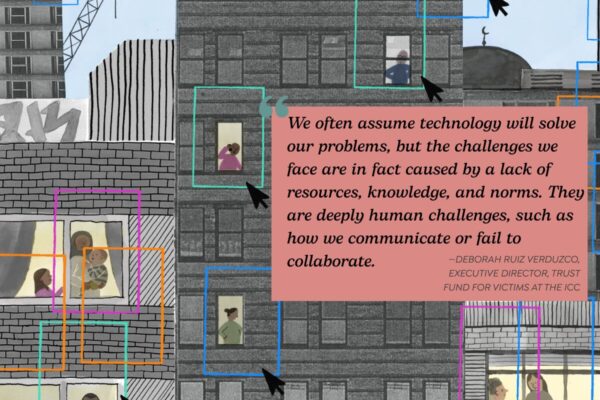
In October 2025, we co-organised an interdisciplinary Policy Hub with the Trust Fund for Victims (TFV) at the ICC in The Hague on the use of AI and other emerging technologies in TJ to date, and why it matters for reparations.

Learn more
column-img

HIGH-LEVEL ENGAGEMENTS

We are presenting our work on AI and TJ at an inter-agency retreat organised by the UN Office of the High Commissioner for Human Rights (OHCHR) in Geneva, and hosting a side-event at the 24th session of the Assembly of State Parties with the TFV at the International Criminal Court (ICC).

column-img

REPORT: AI AND TRANSITIONAL JUSTICE

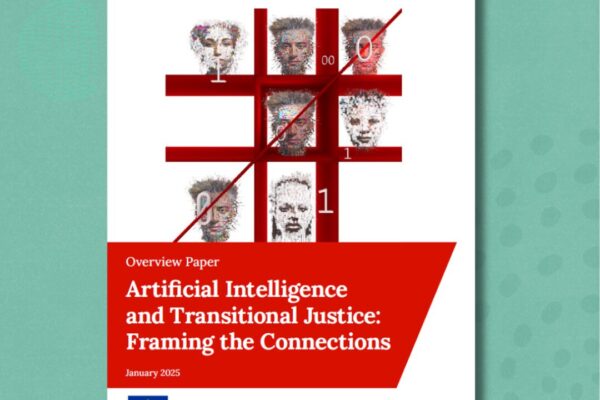
In January 2025, we published an initial overview report exploring how AI is currently used in transitional justice contexts and how it might best be deployed to deliver victim-centred justice processes.

The report makes a range of recommendations including taking a multidisciplinary approach to sharing knowledge and resources and scheduling creative lab-style policy workshops.

Report Summary
column-img

EXPERT MEETING

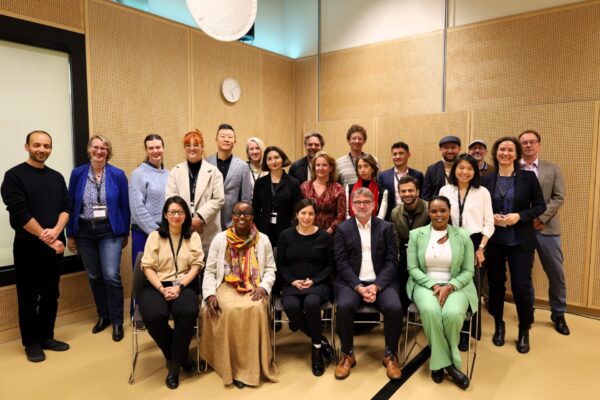
Impunity Watch and the AI Futures Lab at TU-Delft held the first interdisciplinary research meeting in November 2024 to explore how AI is (and could be) used in transitional justice settings.

Expert attendees came from a wide range of AI, technology, legal, transitional justice, and human rights backgrounds. One key topic for discussion was how AI can be leveraged to support a more victim-centred approach to justice.

Read more
column-img

NEXT STEPS

AI could play a critical role in shaping a more just and accountable future. That said, we are only at the early stages of exploring how AI can be safely used in fragile transitional justice settings.

With partner organisations, we will continue exploring AI’s current and potential role in delivering justice processes. Watch this space for further research and related material.

Sign up for updates
“If you’re an NGO working in conflict zones with high-risk individuals and you’re not managing their data right, you’re putting the very people that you are trying to protect at risk of death.”
Impunity Watch logo
Adrien Ogée, Chief Operations Officer at CyberPeace Institute