


16 March 2023
In Tunisia, we help ensure youth participate in historical memory preservation, to ensure communities can heal from a violent past, such as the Mount Agri massacre. (Photo: A mountain in the Governorate of Tataouine, southern Tunisia.)
Following the fall of the Ben Ali regime in January 2011, Tunisian society had the opportunity to openly discuss its national memory and revisit how it remembers its post-colonial history.
These discussions became enshrined in a law on transitional justice in 2013, which focused on truth seeking and national memory preservation, in addition to accountability and reparations. To put the law into practice, a Truth and Dignity Commission (TDC) was established to investigate human rights violations committed in Tunisia between 1955-2013.
Importantly, the Commission included a chapter on providing reparations for those who suffered under repressions and corrupt policies that have led to structural marginalisation of people living outside the developed coastal regions, in places like the southern region of Tataouine.
Many of the claims under this chapter came from victims from Tataouine, recognised as a ‘victim region’ for a massacre that occurred there in 1956.
The forgotten Mount Agri massacre
During the Yousufist-Bourgibist conflict, shortly after Tunisia’s independence from France in 1956, a mountainous area of Tataouine witnessed a bloody fight between the French forces and the Fellaga (a group of fighters that participated in the war of independence during the 1950s).
Mount Agri was the beginning of a series of clashes in the mountains of Tataouine that lasted from March until June. The French air forces bombed Mount Agri and massacred a huge number of the Fallaga. Wounded Fallaga were captured with the help of the Tunisian forces; some were executed, and others were tortured to death. As one witness recounts:
“The French forces searched all the houses and kicked the locals out of their homes … When the bombing happened, kids were screaming, and some of the pregnant women were terrified to the point they dropped their babies.”
The remaining bodies were left in the mountain, declared a military zone closed to civilians, and families were prohibited from collecting and properly burying them.
The Truth and Dignity Commission endorsed the importance of symbolic reparations in the form of memorials, public ceremonies, and other cultural initiatives.
For the Mount Agri massacre case, the Commission recommended continuing the process of collecting and identifying the martyr’s remains. It also recommended an official funeral and memorial service worthy of the sacrifices of all who gave their lives in the incident and for the State to establish a cemetery to honor them.
Additionally, the Commission called for including the names of those who were massacred in the resistance fighters’ records and creating public memorials including museums and monuments to pay tribute to the victims.
While these are positive recommendations, in December 2018, the Commission organised an informal reburial ceremony in which they dug up and moved some remains, without the consent or presence of the families. This led to criticism and backlash from the families, since the Commission failed to implement proper memorialisation.
More than three years after the end of the Commission’s mandate, no meaningful memorialisation initiatives have seen light in the region.
Healing through acknowledging the past
Transitional justice processes aim to help societies heal by acknowledging and memorialising past grievances.
The process opens doors for comprehensive reforms and guarantees of non-recurrence of past violations by harnessing the power of social memory and remembrance of abuses.
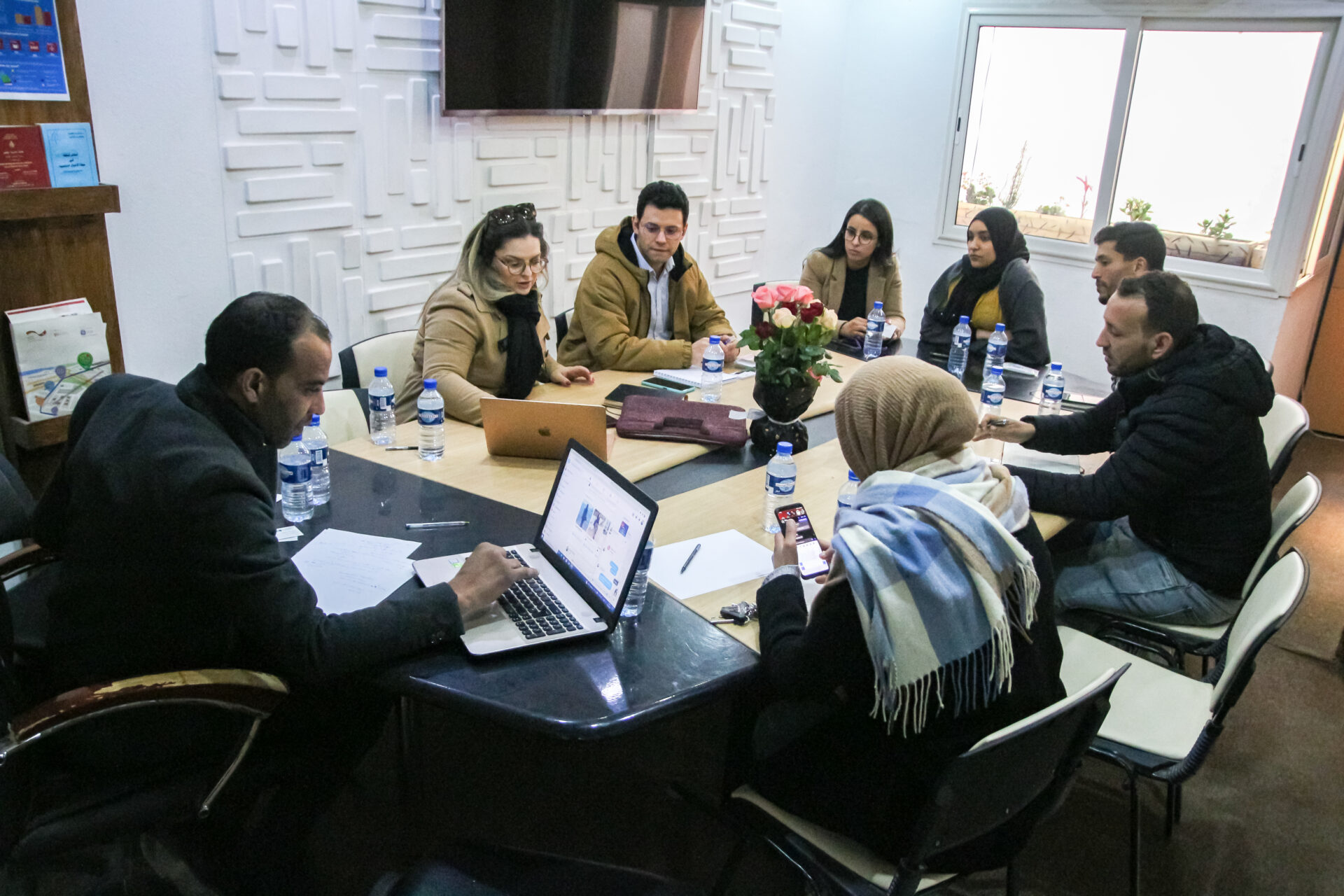
In this context, Impunity Watch has been aiming to open the space for an inclusive discussion with civil society organisations, local state actors and victim associations in Tataouine on the relevance and value of local memorialisation. Two meetings took place so far, in October 2022 and March 2023.
In the first meeting, we created an inclusive space for civil society, youth, experts, and local authorities to allow a constructive exchange on how memorialisation can address community needs and priorities.
In the follow-up meeting, we joined forces with our local partners – the Association for the defense of Human Rights in Tataouine (ADDH) and New Generation Association – to discuss the next steps for the implementation of upcoming memory-related activities in Tataouine, taking into consideration both expectations and contextual challenges.
Youth at the forefront of memory preservation
The massacre in Tataouine had a lasting impact on the local community. The massacre was immediately followed by political repressions, which took the form of institutionalised marginalisation (social, economic, and political).
Our discussions therefore recognised the importance of engaging young people in memory preservation, to ensure they can become agents for change for generations to come.
Together with our partners, Impunity Watch will support a youth group to gather and analyse Agri-related history and use artistic content to capture the legacy and memory of the battle.
In upcoming workshops, data collecting and storytelling techniques will be explored.
This will equip young people in Tataouine to play a leading role in preserving the past and support meaningful transitional justice.