


15 July 2026
From 23 June – 2 July 2026, the United Nations Working Group on Enforced or Involuntary Disappearances visited Guatemala. The delegation was led by experts Ana Lorena Delgadillo Pérez from Mexico, and Aua Baldé from Guinea-Bissau.
The delegation met with the President of Guatemala Bernardo Arévalo, as well as government officials, representatives of the Supreme Court of Justice and the Public Prosecutor’s Office, and relatives of victims and civil society organisations. They also visited the departments of Quetzaltenango, Suchitepéquez, Petén and Escuintla.
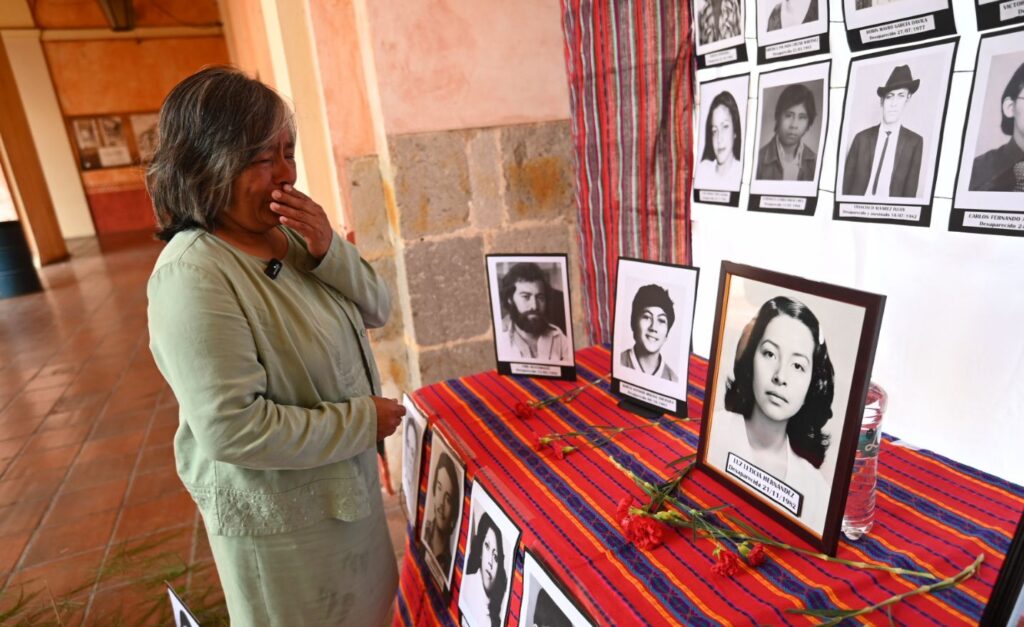
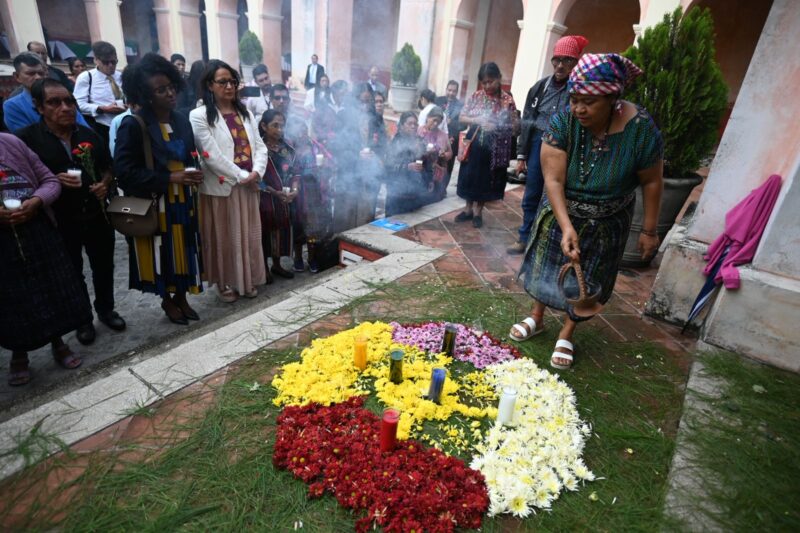
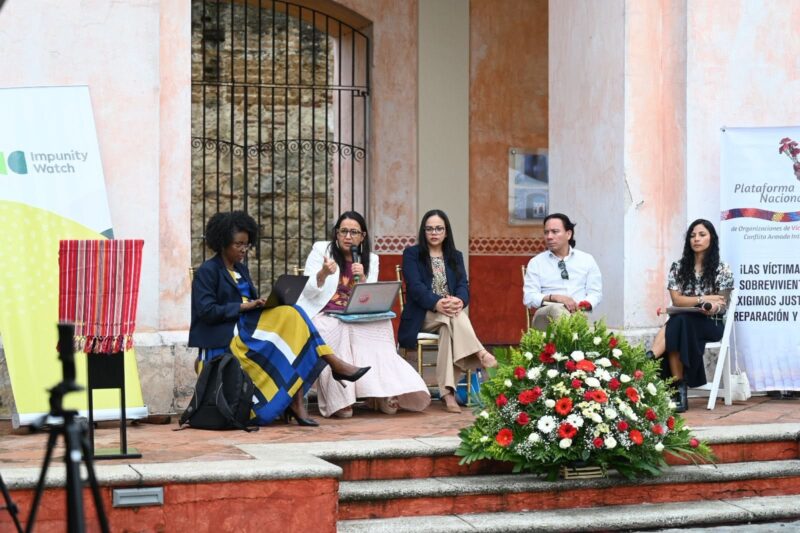
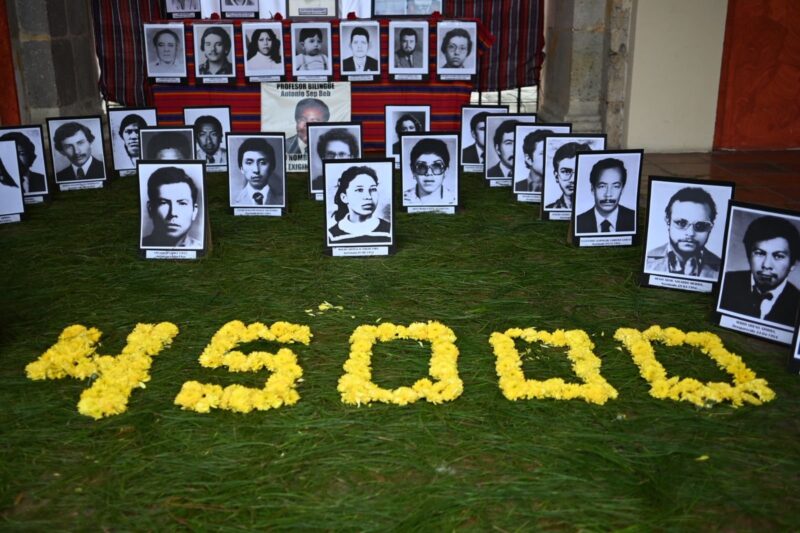
During the visit, the Working Group took part in a commemoration of victims of enforced disappearance in Guatemala to mark the National Day Against Enforced Disappearance, organised by Impunity Watch and the National Platform of Victims. They also took part in the round-table discussion “More than 40 years of searching”, which brought together relatives of disappeared persons, human rights organisations and state institutions to reflect on the obstacles families have faced in searching for their loved ones, expectations regarding the new Search Mechanism launched by the Guatemalan Government, and international commitments regarding the search for disappeared persons.
Preliminary remarks: The resilience of families
At the end of their visit, the experts held a press conference and shared a press release. In their preliminary remarks, the experts acknowledged the resilience and perseverance of the families of victims of enforced disappearance, particularly women, who have sustained the search and the struggle for truth and justice for decades. Furthermore, they expressed concern about the institutional neglect, poverty and revictimization that victims continue to face, as well as the lack of coordination between the institutions responsible to conduct search and investigation. They pointed out that the search for missing persons cannot continue to rely on the efforts of families and human rights organisations and must rather become an urgent priority for the Guatemalan State.
The Working Group welcomed certain recent initiatives by President Arévalo’s government, such as the creation of the Mechanism for the Humanitarian Search for Disappeared Persons during the Internal Armed Conflict and the development of a National Plan for Reparation and Dignification of Victims. However, they warned that these measures will only be effective if they have legal backing, sufficient resources and stability beyond government changes.
The international experts warned against narratives that deny or downplay the gravity of the human rights violations committed during Guatemala’s internal armed conflict (1960–1996), which hinder the creation of a collective memory and the strengthening of democracy. According to data from the Truth Commission (Commission for Historical Clarification – CEH), more than 45,000 people were reported missing during the armed conflict, including 5,000 children, and 93% of the human rights violations were committed by the army, the police and other state security forces. Most of the victims remain disappeared, some have been found buried at former military bases.
“Forty years of searching have not been enough to heal our pain, nor have they been enough for the State to give us an answer for our family members who disappeared during the armed conflict. ” —Feliciana Macario, family member of a disappeared person (Source)
Recommendations for the Guatemalan State
Among their key recommendations, the experts urged the Guatemalan State to open and preserve military and police archives relating to the armed conflict, to speed up exhumations at former military bases, and to protect sites where the remains of disappeared persons might be found.
They urged to strengthen the institutions responsible for the search as well as the coordination efforts in order to establish a synchronised national search system; to guarantee of a comprehensive reparations policy for victims; to assure families’ participation in all decisions relating to the search; and move forward on reforms that strengthen the independence of the justice system. They reiterated that the right to truth, justice, reparations and guarantees of non-repetition are international obligations that Guatemala must fulfil.
“The State of Guatemala has a historical debt to the victims of the armed conflict, and the search for missing persons should be a priority for the country.” —Ana Lorena Delgadillo, UN Working Group on Enforced or Involuntary Disappearances (Source)
The mission’s final report will be presented to the United Nations Human Rights Council in September 2027. In the meantime, the preliminary observations serve as a roadmap for the Guatemalan State to strengthen its efforts in the search for disappeared persons and to move towards the justice that thousands of families have been demanding for decades. Read the preliminary report on the visit in Spanish here.
Watch our video interview: