INOVAS: A global network of victims and survivors

A victim-led platform which brings together victims and survivors from around the world, connecting their struggles and putting forward a unified voice.

© Getty Images

Since 2020, Impunity Watch has been convening victims and survivors of serious human rights abuses to establish The International Network of Victims and Survivors of Serious Human Rights Abuses (INOVAS).

This victim-led platform offers a safe and collaborative space to exchange experience, strategies and learnings, and help victims and survivors feel they are part of a global community.

It also challenges the idea of victims as ‘passive’ or ‘weak’, focusing instead on their power as changemakers with first-hand experience, knowledge and expertise to achieve true justice and accountability, and to end impunity for perpetrators of violence and human rights abuses.

INOVAS works with key national, regional and international organisations, as well as alongside peers, and supports work already being done in communities.

Awareness-raising and advocacy to inform policymakers and political actors on transitional justice issues, victim participation and the fight against impunity is just one step in a broader strategy to better involve victims and survivors in the pursuit of justice and accountability around the world.

The network was officially launched in 2011 and focuses on four key activities:

  1. Advocacy
  2. Victim participation in justice processes
  3. Documentation and participatory research
  4. Peer-to-peer exchange and solidarity

To learn more about INOVAS, visit: www.inovas.ngo

“Often, we feel alone in our countries. Solidarity is a way for us to build bridges, and get our voices heard.”
Impunity Watch logo
Miguel Itzep, coordinator of Q’anil Tinamit (Guatemala), founding member of INOVAS
NEW

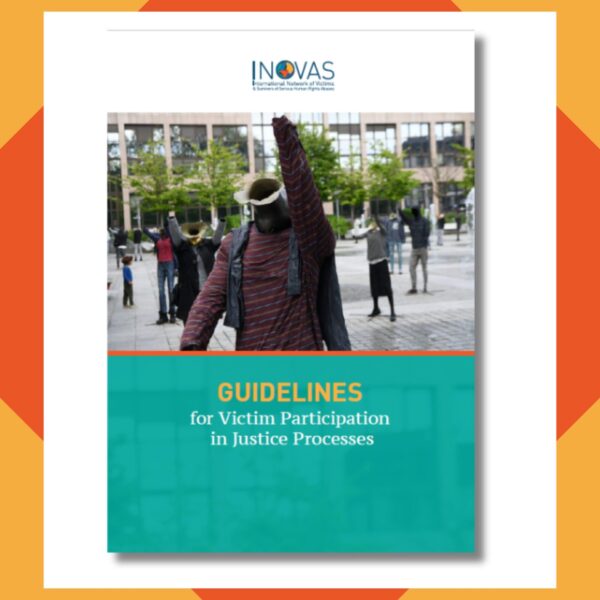
VP Guidelines

Victims and survivors possess the expertise born of their struggle for justice, yet they are still excluded from decision-making.

To address this, INOVAS has developed 9 practical guidelines to ensure meaningful victim participation in transitional justice responses to human rights violations. They are also available in FrenchSpanish, and Arabic.

Read it now
VIDEO

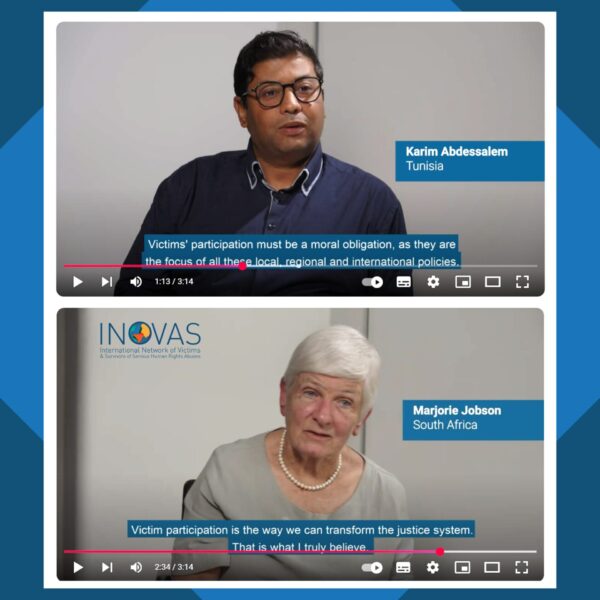
What can policymakers and the international community do to support victim participation in justice processes?

Hear directly from victims and survivors in this video, showcased at a panel discussion on the UN Secretary-General Guidance Note on Transitional Justice, at the Belgian Mission to the United Nations in New York on 4 February 2025.

The discussion highlighted the vital role of victims and communities in achieving impact through transitional justice.

Watch now

Despite the growing understanding that victims must be at the centre of accountability and transitional justice efforts to ensure their long-term success, their participation remains limited.

In some cases, security issues, political pressure, and discrimination may prevent participation. In others, victims and survivors are consulted within transitional justice structures in piecemeal or top-down ways that serve to actually disempower them of their rights.

This can often leave victims and survivors feeling ignored, sidelined, or misrepresented, but also lead to less culturally and contextually sensitive results.

Gradually formed on the sidelines of rights conferences between Europe and the Middle East between 2019-2020, the members of INOVAS sought to create a space for victims and survivors to drive the agenda. Bringing together 11 members, all victims and survivors in their own right, from more than 10 countries, INOVAS’ reach is global, spanning several continents.

Although the idea of victim participation in transitional justice has gathered pace in recent years, too often these justice processes are technocratic and top-down, led by UN technocrats, NGOs, and national policymakers. This is less likely to provide just, desired solutions to communities who suffered abuses.

Only victims and survivors truly know how to best remedy the crimes committed against them.

INOVAS members strongly hold that transitional justice efforts should be rooted in local contexts: moving away from top-down processes and instead directly involving survivors seeking horizontal power structures.

Read more about the story behind INOVAS here.