


14 June 2023
Palestinian refugees in Syria remain one of the most forgotten and especially vulnerable groups in the country, including in relation to violations of Palestinians’ housing, land and property (HLP) rights.
Housing, land and property rights violations of Palestinian refugees in Syria
While Palestinians – like Syrian citizens – experienced HLP rights violations for decades even before 2011, the Syrian regime has used the conflict as an opportunity to pass punitive laws and enforce administrative decisions seeking to dispossess and entrench the displacement of millions of Syrians, Palestinian refugees, stateless people, and others. These policies – if left unchecked – will allow demographic and social engineering strategies to succeed, resulting in the erasure of certain Palestinian neighbourhoods, as has occurred in other Syrian areas that witnessed significant opposition activity over the years.
Policy brief
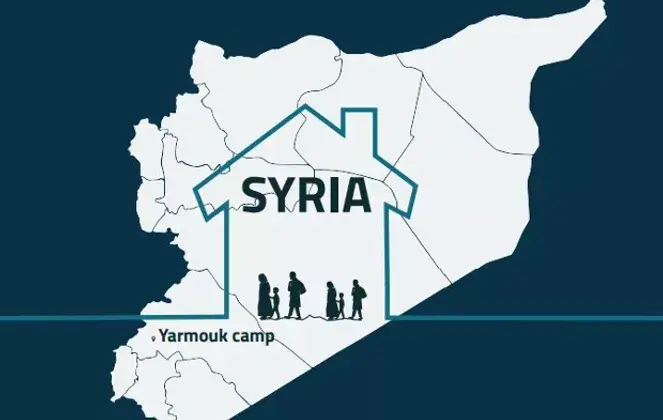
This policy brief, in collaboration with PAX, is based on a longer, in-depth study, titled ‘Twice dispossessed: Palestinian refugees in Syria deprived of housing, land and property rights.’, by Ansar Jasim, Abdullah al-Khateeb, and Abdulrahman Shaheen, and originally published in Arabic and English in April 2022. The report seeks to set the record straight regarding the differences in HLP rights afforded to Syrians and Palestinians, as well as the different, and increasingly restricted, rights granted to Palestinians according to their year of entry into Syria. The authors, among a multitude of sources, notably draw from their own and others’ lived experiences as refugees forcibly displaced from Yarmouk camp – once of Syria’s largest Palestinian community – to describe the HLP rights violations and risks facing Palestinian refugees in Syria since the breakout of the conflict.
This examination of regime policies and practices utilised against Yarmouk camp demonstrate the types of impacts such policies can and have had on displaced Palestinians across the country, as well as the likely projections for other Palestinian communities across the country. The report was uniquely and expressly produced by Palestinian-Syrians, seeking to give more space to the people of Yarmouk, not only as sources, but also as producers of knowledge and defenders of human rights.