


22 May 2026
By Gentil Kasongo (DRC Country Programme Manager) and David Taylor (Head of Africa Regional Programme)
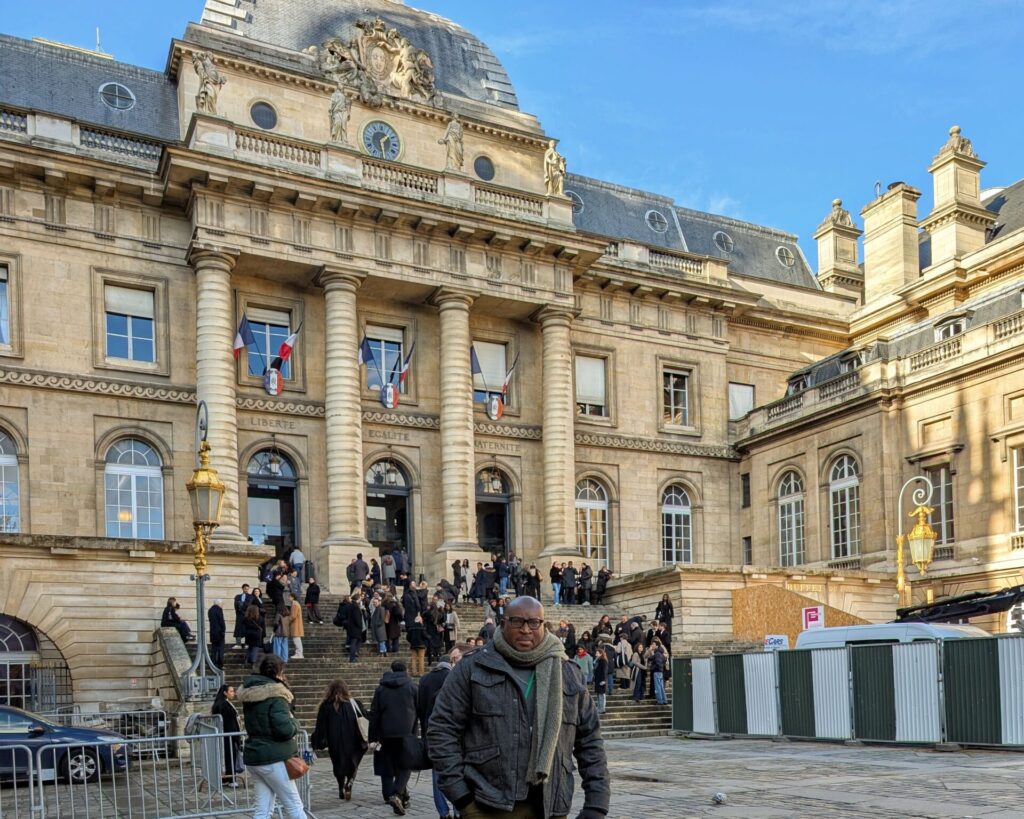
On 15 December 2025, the Paris Assize Court sentenced Roger Lumbala Tshitenga to 30 years in prison for complicity in crimes against humanity committed during the 2002 “Effacer le tableau” (Erase the Board) military operation in north-eastern DRC. Roger Lumbala was the leader of an armed group, later becoming Minister of Foreign Trade and a Member of Parliament in the DRC. Dozens of victims and survivors testified, and five civil society organisations joined the proceedings as civil parties.
The verdict was historic. It was the first universal jurisdiction trial related to events in the DRC, and the conviction was the first by a national court for crimes committed during the Second Congo War.
Read our joint bulletin with TRIAL International
The trial was especially significant for minority communities targeted during the military operation and for the female survivors of rape and sexual violence whose testimonies broke decades of silence. For legal observers, the conviction demonstrates the importance of accountability in the fight against impunity and why survivors’ voices remain important two decades after violence.
And yet as the communities closest to the crimes would make clear, a verdict alone is not the same as justice felt. In Beni (North Kivu) and Bunia (Ituri) the prevailing feeling was not triumph. It was something more complicated: relief obscured by distance, hope undermined by exclusion.
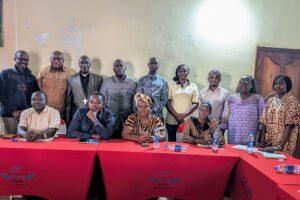
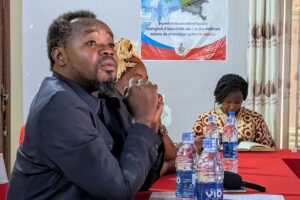
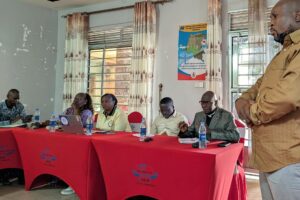
Impunity Watch and TRIAL International supported media coverage of the trial in Paris, with the goal of contributing to bringing it closer to the communities for whom justice was being delivered, supporting indirect victim participation in the proceedings. Two Congolese journalists reported from inside the courtroom and focus groups were later held in Beni and Bunia in December 2025 to gauge community perspectives.
What we heard should push those of us working on the fight against impunity to reflect deeply on what justice means and on the accessibility of criminal trials for victims and survivors.
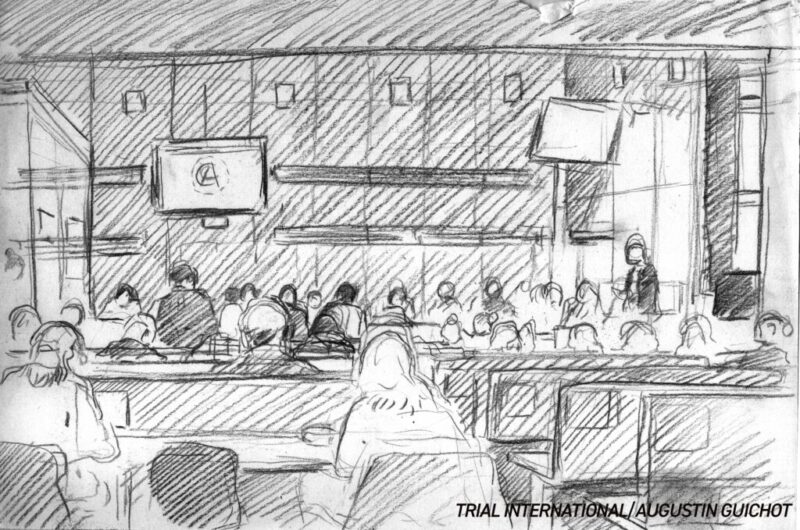
Illustration: © TRIAL International / Augustin Guichot
A verdict welcomed, but from afar
Community members in Beni and Bunia followed the trial through radio broadcasts, WhatsApp groups, and online media. Many heard of the conviction and expressed cautious relief.
“The announcement of the trial’s outcome has given us hope that we, the direct and indirect victims, can have our rights restored”, one community leader told us. A young activist echoed this: “Sooner or later, even the most powerful can face justice.”
But relief quickly gave way to frustration. The trial was held thousands of kilometres from where the crimes were committed. Survivors could not watch the proceedings unfold as unlike the trials of Thomas Lubanga and Germain Katanga at the International Criminal Court (ICC) – which were broadcast via live satellite transmission to screens in affected communities across Ituri – the court in Paris prohibits recording in the courtroom. The result was that victims followed a verdict, not a trial.
“Compared to the ICC, the French justice system does not appear to have made available the necessary resources to allow the affected communities in Ituri to properly follow the Lumbala trial.” –Religious and community leader, Bunia focus group
Some community members were exposed only second-hand to the trial updates, creating even greater distance from the proceedings. This appeared especially pronounced for women, who said they are unaccustomed to following the news. As a result, information was distributed unevenly, producing disparities in people’s ability to engage with the trial.
Justice seen is justice felt
A consistent message emerged from both focus groups: for victims and affected communities, justice must be visible and audible to be meaningful. Community members repeatedly expressed their preference for mobile courts, local hearings, and live transmissions. They spoke of the ICC’s outreach model employing satellite broadcasts and listening clubs in villages as a benchmark that the Paris proceedings failed to meet.
This is an important reflection. The sense that justice is “seen and heard” within the community is not a preference for spectacle, rather it is a prerequisite for legitimacy. When a trial is conducted in a courtroom on another continent with no live feed and limited media explanation of legal procedures, justice risks becoming something that happens to victims rather than something that happens for them and that they experience.
Outreach is about much more than audiences passively receiving information and should be viewed as the foundation for meaningful, engaged participation.
Seen in this way, we can understand why victims and survivors in Beni and Bunia expressed a preference for proceedings closer to home and for community-based justice.
Confusion around universal jurisdiction
Detachment from the proceedings was also fuelled by misunderstanding. Participants in both focus groups voiced confusion about why Roger Lumbala was tried in France at all and not in the DRC. The principle of universal jurisdiction allowing French courts to prosecute international crimes regardless of where they were committed was not adequately explained to affected communities, either before or during the trial.
For any criminal proceedings, but especially those held so far from the location of the crimes, outreach on legal principles is part of what makes justice comprehensible and credible to those it is intended to serve. Access to information enables people to take informed decisions about their participation in legal proceedings. It is the basis for active engagement and mobilisation.
This gap also has political dimensions. The Congolese state’s reaction to the Lumbala trial in Paris was described by focus group participants as “almost hostile”, revealing at best an ambiguous political will to fight impunity for serious crimes. When a government appears to distance itself from an international conviction of a former warlord, it sends a message to victims about where accountability sits on the national agenda.
Lessons to be drawn
None of this diminishes what the Lumbala verdict represents. A conviction for crimes against humanity after 23 years of impunity is significant. It matters to survivors. One only needs to read the reaction of the survivors testifying at the trial in Paris to understand this. From a legal standpoint, it sets a precedent and it demonstrates that universal jurisdiction can be a meaningful tool when domestic justice systems are incapable.
But the trial could have had greater impact for the sense of justice felt by affected communities. Considering what we heard in Beni and Bunia, four key lessons should be drawn:
- First, courts exercising universal jurisdiction must endeavour to make exceptional arrangements for live or recorded transmission of key hearings, particularly the opening of proceedings, the hearing of victims and witnesses, and the pronouncement of judgments. What French law prohibits inside the courtroom should not preclude creative outreach solutions outside it.
- Second, media coverage of future universal jurisdiction trials must be accompanied by sustained educational programming to explain legal procedures, the rationale for the jurisdiction being applied, and the rights of victims, and not only reporting on verdicts. Outreach and communications should be tailored to the intended audience, both in terms of messages and the platforms for their delivery.
- Third, local actors including CSOs, victim groups, community leaders, and youth groups can play an important role in supporting victims’ access to information and informed participation in legal proceedings, especially those taking place so far from where the crimes were committed.
- Fourth, reforms of the Congolese justice system must intensify so that communities are not dependent on courts thousands of kilometres away to see accountability for crimes committed on their soil. Universal jurisdiction is a last resort, not a substitute for political will at home.
Justice at a distance is still justice…but only barely
The communities we met in Beni and Bunia largely welcomed the Lumbala verdict with their sense of whether the conviction represents justice tempered by detachment from the trial, a feeling of only partial redress, the lack of reparations, and the direct perpetrators of the atrocities – the soldiers, not just the commanders – still enjoying impunity.
“This should not remain an isolated case”, a resident of Beni (whose family member was killed during the conflict) told us. “There are many other warlords who are free and continue to commit atrocities”.
He is right. Until justice becomes something that communities in eastern DRC can see, hear, and feel as their own, and not as a distant event reported second-hand, the fight against impunity will remain incomplete.
This opinion piece draws on the report of a joint initiative by Impunity Watch and TRIAL International to support community access to information during the Lumbala trial (November-December 2025), including focus groups conducted in Beni (North Kivu) and Bunia (Ituri) after the verdict was delivered. Two journalists, Blaise-Pascal Makandi and Claude Sengenya covered the trial from Paris, producing diverse media reports throughout the proceedings. The project was financed by the European Union’s Global Initiative Against Impunity (GIAI).