


5 April 2023
To be truly effective, the draft national transitional justice policy in the DRC should ensure ownership by communities most affected by the violence – argues Gentil Kasongo, Programme Manager DRC at Impunity Watch
In January, the Scientific Committee responsible for drafting a national transitional justice policy for the Democratic Republic of Congo (DRC) presented its final report, with support from the UN Human Rights Office.
The draft policy is a major step in the design phase of transitional justice processes and mechanisms in the DRC.
But to ensure the policy leads to meaningful and sustainable outcomes, the ownership of the process must be held by all communities affected by conflict and violence in the country. Can victims, survivors and affected communities in eastern DRC truly say: “The ongoing transitional justice process is ours”?
Such ownership should require their participation in different phases of the transitional justice process, especially the design phase.
Well-conducted popular consultations on transitional justice are one of the best ways to get victims involved in the design phase. This is crucial for ownership of the whole process by the populations most concerned.
The transitional justice policy process
The draft national policy on transitional justice in the DRC was inspired by, among other sources, the results of popular consultations in only eight of the twenty-five provinces where the consultations were supposed to be conducted. Impunity Watch was among the key organisations consulted by the Scientific Committee to provide advice and guidance on a number of subject matters, including victim participation in the process.
However, among the provinces that are still waiting for popular consultations are Ituri, North Kivu, and South Kivu – which are the most affected by conflict and violence and have the most victims.
In line with a short-term roadmap for the transitional justice process in the DRC, the Council of Ministers adopted the report presented by the Scientific Committee in February. This may mean that popular consultations on transitional justice in the remaining provinces may not take place.
This would mean that perspectives from these specific contexts will not be included, diminishing the much-needed ownership of the policy by victims in the eastern provinces.
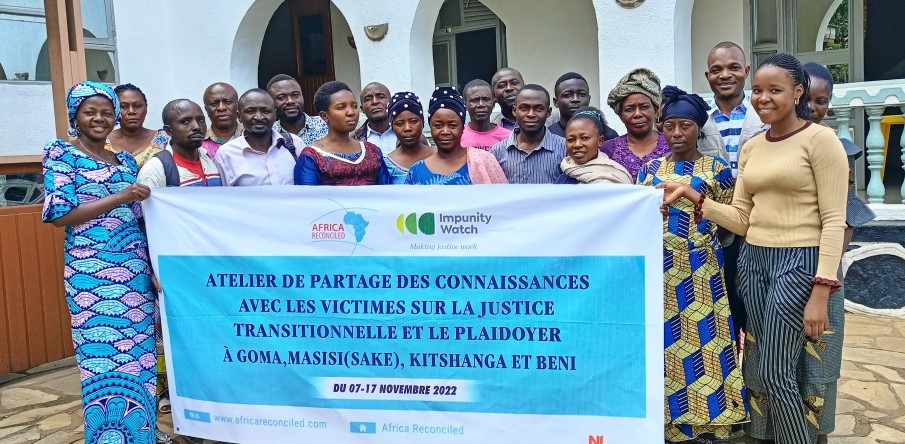
This photo comes from a capacity-building workshop on advocacy for transitional justice with a victim group held in the province of North Kivu (in partnership with Africa Reconciled).
The design phase of the transitional justice process in the DRC is crucial, as it constitutes the foundation on which subsequent phases should be built: implementation, monitoring and evaluation, and results sustainability. Hence, key stakeholders should balance the urgency of moving the transitional justice process forward in the DRC with the need to avoid any rush that could jeopardise it. It’s not too late.
Slowing down the process would help ensure the design phase is conducted according to acceptable standards, including holding popular consultations in the remaining provinces, especially those most affected by conflict and violence, and getting civil society and victim groups sufficiently involved.
Impunity Watch has been working with civil society, victim groups and other stakeholders to promote meaningful victim participation in transitional justice processes in the DRC. We will continue to do so through our various interventions, including community-based work, research, capacity-building, networking, awareness-raising campaigns, and policy engagement activities, to ensure that transitional justice processes in the DRC are more inclusive and victim-centred.
Read the original version of the blog in French and find out more about our work in the DRC.
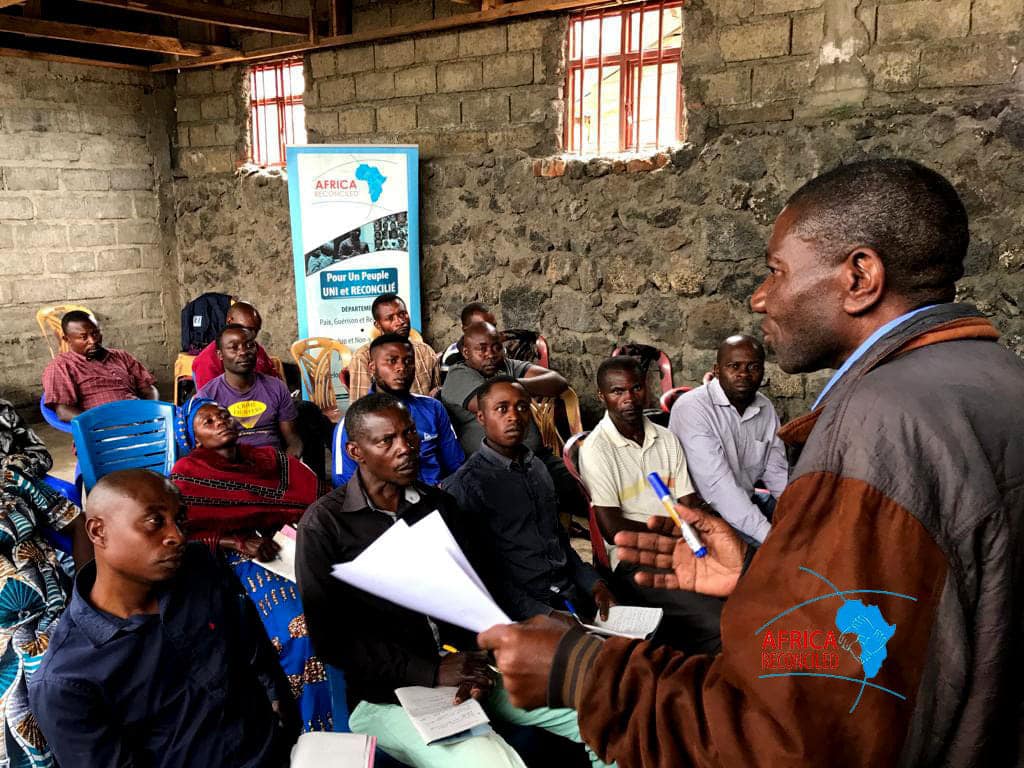
The featured header photograph comes from our partner, Africa Reconciled and showcases a training of young people in the village of Nzulo, the DRC. The activity is carried out as part of the capacity building project for religious leaders in combating community violence and is aimed at the transformation and positive change of communities.