


7 September 2023
Religious leaders can play a key role in transitional justice processes. In a recent policy brief by Impunity Watch, youth from across four African countries stressed the important role of religion and religious leaders in shaping transitional justice.
“In contrast to what we know about punitive justice, which focuses on the offence and the punishment, transitional justice, through its pillars, aims at reconciliation and social cohesion in communities.”
–Abbé Valentin Nsabimana, from Mwaro (CECAB)
Since the signing of the Arusha Accords (a peace agreement) and the creation of the Truth and Reconciliation Commission (TRC) in Burundi, the involvement of religious leaders has been highly sought after. Our programme in Burundi recently began a pilot strategy aimed at working with religious leaders to influence national and community processes for dealing with the past.

A united collaboration with diverse religious leaders
A major part of the strategy is partnering with the Council for Interfaith in Burundi (CICB). The CICB is a multi-religious platform founded by the country’s predominant religions, namely the Catholic Church through the Conference of Catholic Bishops of Burundi (CECAB), the Protestant member churches of the National Council of Churches of Burundi (CNEB) and the Islamic community of Burundi (COMIBU), with the philosophy: “Different beliefs, common action”.
These religious actors have a moral authority and exercise considerable influence on Burundian society. Their joint action aims to promote values such as reconciliation, peace and justice.
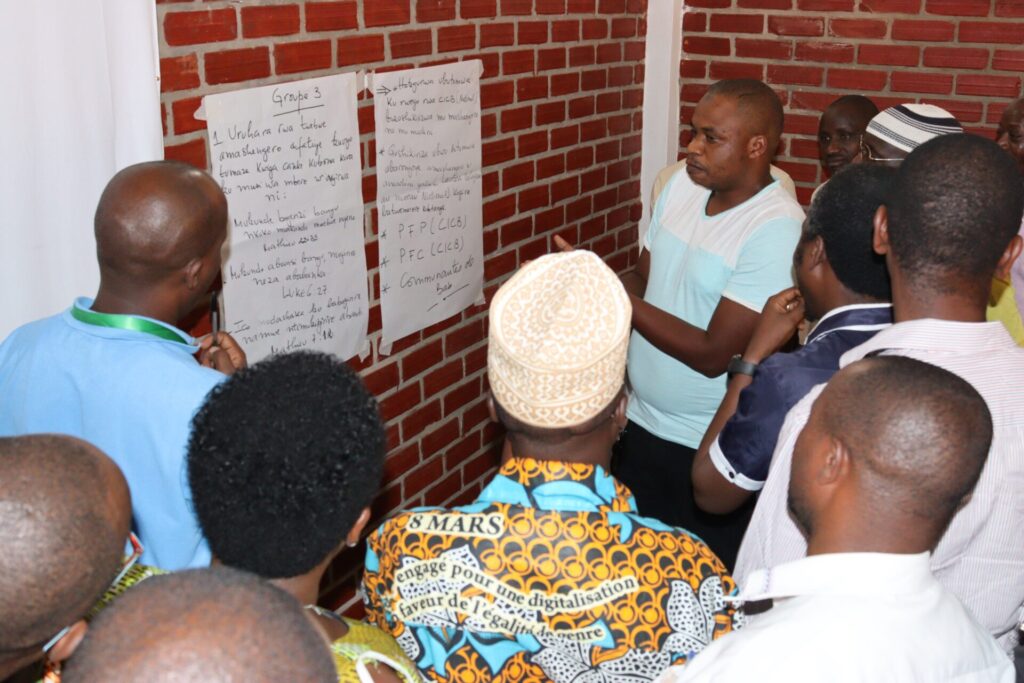
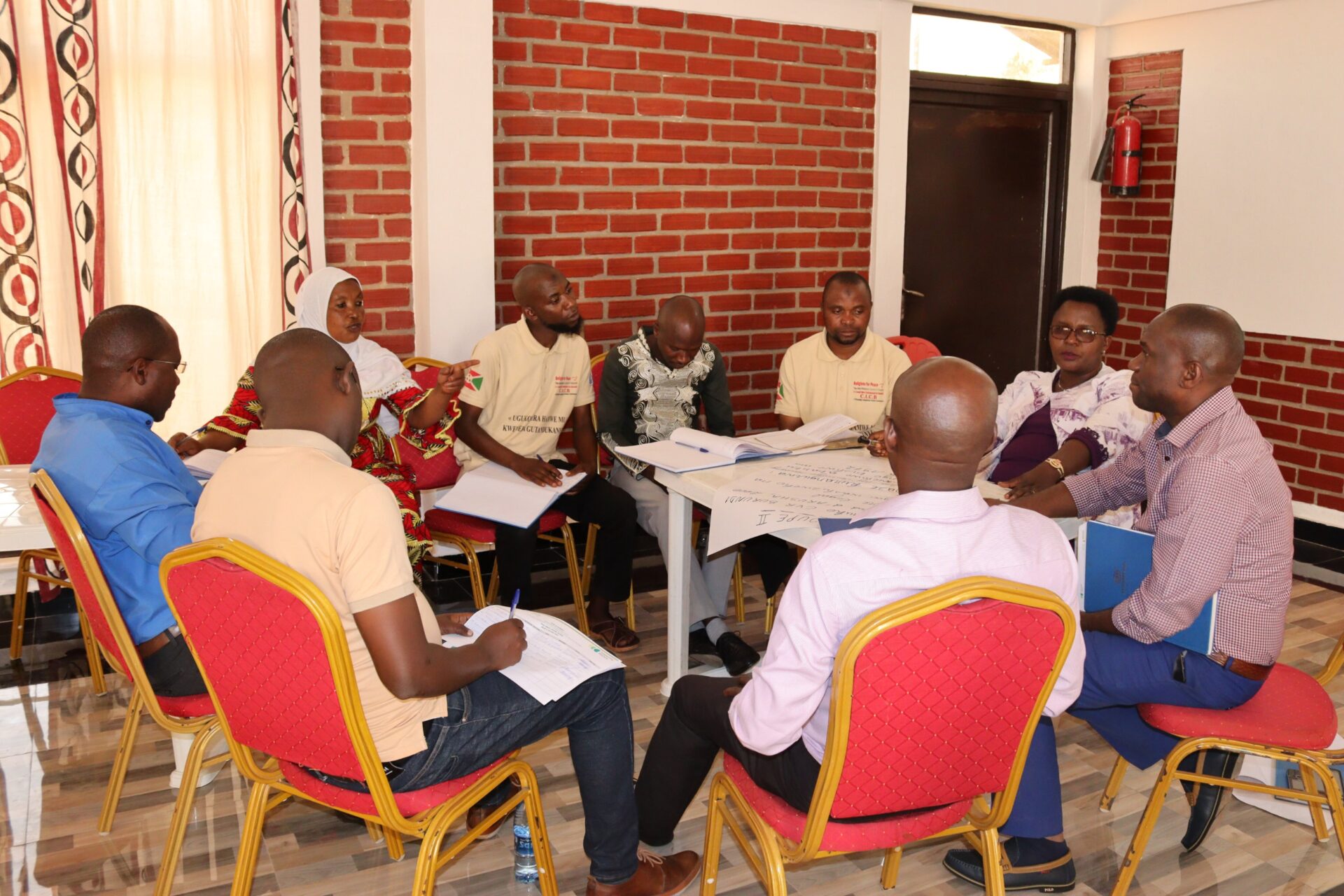
With this in mind, we organised a five-day training course on transitional justice for CICB staff and focal points from 17-21 July 2023. The training focused on key elements of transitional justice, the functioning of truth and reconciliation commissions, memory, gender, violent masculinities and mental health and psychosocial support (MHPSS).
“As a young man and a religious figure keen to know the truth about our country’s past, I’m delighted to have been invited to this training course.”
–Abbas Niyongere, from Bubanza (COMIBU)
The training provided an opportunity for religious leaders to learn about the importance of dealing with the past in a country like Burundi, which has experienced cycles of violence, and to discuss together their role in the national process and in community initiatives.

From forgiveness to reconciliation, from ‘demonic possession’ to trauma
On the first day of training, participants emphasised forgiveness–a universal act preached by all religions–while downplaying the importance of truth, justice, reparations and guarantees of non-repetition.
At the end of the five-day training, supported by a variety of methodologies and practical examples of transitional justice from around the world, the majority of participants attested to shifts in their understanding of forgiveness in the service of reconciliation towards a more comprehensive appreciation of dealing with the past. In their view, forgiveness alone cannot bring peace and human rights to a war-torn country.
Likewise, the CICB players found themselves confusing cases of demonic possession with traumas. The training was an important opportunity to learn more about mental health and psychosocial care.
“Through this training, I realised that we often confuse cases of possession by evil spirits with trauma in the people who confide in us.”
–Pastor Julien Nsengiyumva, from Bujumbura (CNEB)
The participants thus affirmed that the training equipped them with skills that would strengthen their meetings with community members and the local administration.
“Among the factors that cause our religious denominations to fail in their mission is that the people we preach to are living with trauma without knowing it. I’m aware that we need to integrate the notions of listening and accompanying the faithful.”
–Abbé Pacifique Minani, focal point in Ngozi (CECAB)
Religious leaders commit to connecting community and championing transitional justice
At the end of the training, CICB members committed to holding feedback sessions for their colleagues, namely the provincial and communal focal points, to encourage the integration of transitional justice themes into their activities.
At the institutional level, our colleagues in Burundi and CICB agreed, among other things, to set up a collaboration framework to connect community actions with national decision-makers. A next phase of the pilot strategy will soon be launched with the CICB and other stakeholders.
“This training came at the right time. As [Burundi’s Truth and Reconciliation Commission] has just given its achievements report, it’s very interesting that we have more advanced notions of how such a mechanism works, so that we can communicate them to the communities.”
–Marianne Nijimbere, focal point in Rutana (CECAB)
—
The religious actors’ strategy is part of two projects: Barundi Tuyage! (Let’s talk, Burundi) and Dukomeze Kunywana (Strengthen Reconciliation), financed respectively by the Dutch Embassy and the European Union.