


22 January 2024
The immediate and decisive action of Indigenous communities, civil society, and the international community were crucial to ensuring a peaceful transition of power allowing Bernardo Arévalo to take office.
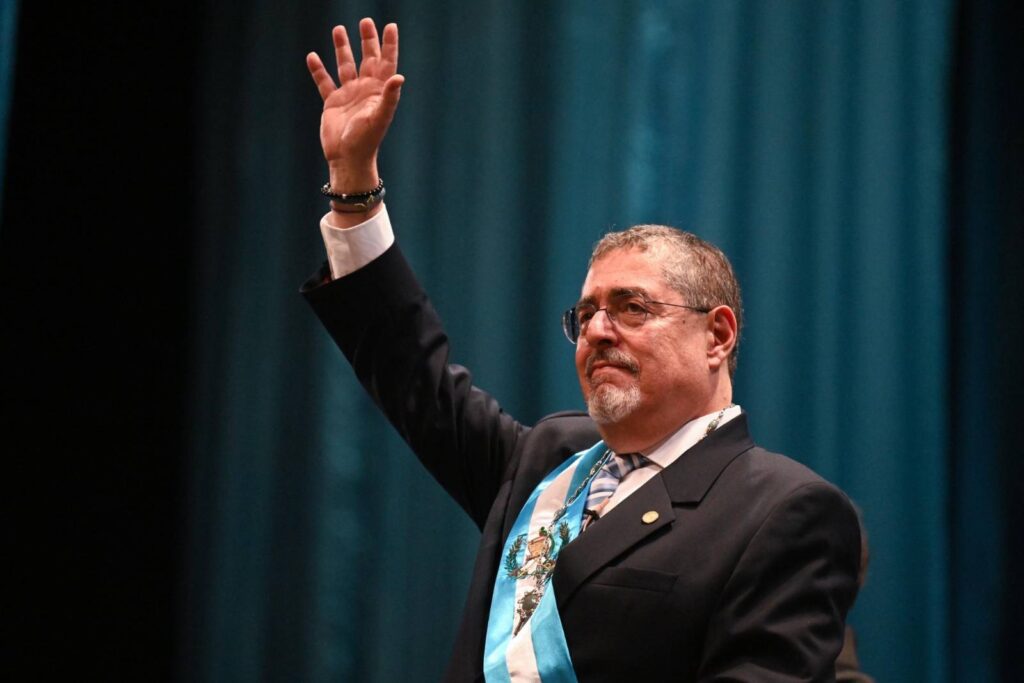
On Monday 15 January 2024, anti-corruption politicians Bernardo Arévalo and Karin Herrera finally took office as the new president and vice president of Guatemala, following an unexpected election victory in August last year. The inauguration came after five months of tensions due to attempts from Guatemala’s pacto de corruptos — an informal alliance of the country’s elites with links to corruption and organised crime — to annul the elections and prevent the transfer of power.
Democracy was saved thanks to the joint actions of Indigenous communities, civil society, and the international community. Indigenous peoples, despite the historical oppression against them, have played a significant role in defending the election results and ensuring a peaceful transfer of power. Their commitment to pursuing non-violent protest — from organising national strikes and week-long demonstrations, to lobbying the international community —put significant pressure on the incumbent government and made change possible.
Indigenous peoples, despite the historical oppression against them, have played a significant role in defending the election results and ensuring a peaceful transfer of power.
For more than 100 days Indigenous peoples led peaceful demonstrations in front of the Attorney General’s Office to limit the spurious persecution against Arévalo’s party Movimiento Semilla, and the authorities of the Electoral Tribunal.
Civil society organisations, including women, youths, victims of the armed conflict, religious and neighbourhood groups, joined the peaceful demonstrations in more than 150 locations around the country, demanding the resignation of the Attorney General Consuelo Porras. Civil society organisations also fought with legal actions before the Constitutional Court to appeal the abuses of the Attorney General’s office and lobbied the international community to prevent the rupture of democracy. Even the progressive business elite supported the fight for democracy.
For its part, the international community including the Organisation of American States, to OHCHR, the US, the European Union and the European Parliament observed the elections, condemned the arbitrary actions of the Attorney General’s Office and put further pressure on the government through targeted sanctions. The US sanctioned more than 100 people including congress members, justice officials and businesspeople, while the European Union also created a specific system of sanctions against antidemocratic actors in Guatemala. Combined, grassroots actions and international pressure have helped Arévalo take office and save democracy.
There was another surprise on 14 January: the Semilla party won the presidency of the Congress, despite the intentions of the Attorney General’s Office to cancel the party. Ninety-two Congress members voted for Samuel Pérez as president of the Congress; if this alliance is maintained, some changes could be implemented. However, the Congress continues to be dominated by corrupt parties and they will continue to oppose the government of Arévalo.
Another challenge is that the judiciary continues to be controlled by the corrupt elite, posing a threat through malicious claims against Arévalo and his party. However, this year the Congress will elect a new Supreme Court, which is an opportunity to make changes in the justice system. This election is key to continuing the fight against corruption and impunity, and the national and international observation of this election will be important.
Combined, grassroots actions and international pressure have helped Arévalo take office and save democracy. The election is key to continuing the fight against corruption and impunity.
Arévalo announced that he will demand the resignation of the Attorney General, who ends her mandate in 2026, and stop the political persecution against independent judges, journalists, human rights defenders, and politicians.
Without doubt, Arévalo will govern in adverse conditions with a congress and judicial system working against him. For this reason, it is fundamental to maintain the support of the Indigenous peoples, civil society, and the international community. In the past months, they have shown the capacity to maintain hope.
In December 2023, Arévalo participated in a seminar on human rights and reparations, organised by Impunity Watch, promising to put peace and the guarantee of the rights of victims of the armed conflict back on the agenda. Impunity Watch celebrates the rescue of democracy in Guatemala and is willing to work with the new government on a human rights agenda and continue the fight against impunity. We will continue working in alliance with victim organisations, indigenous movements, civil society, and international community to promote changes in Guatemala and sustain democracy and human rights.
Photo: Carlos Alonzo, Impunity Watch
Learn more: Our work in Guatemala