


7 March 2025
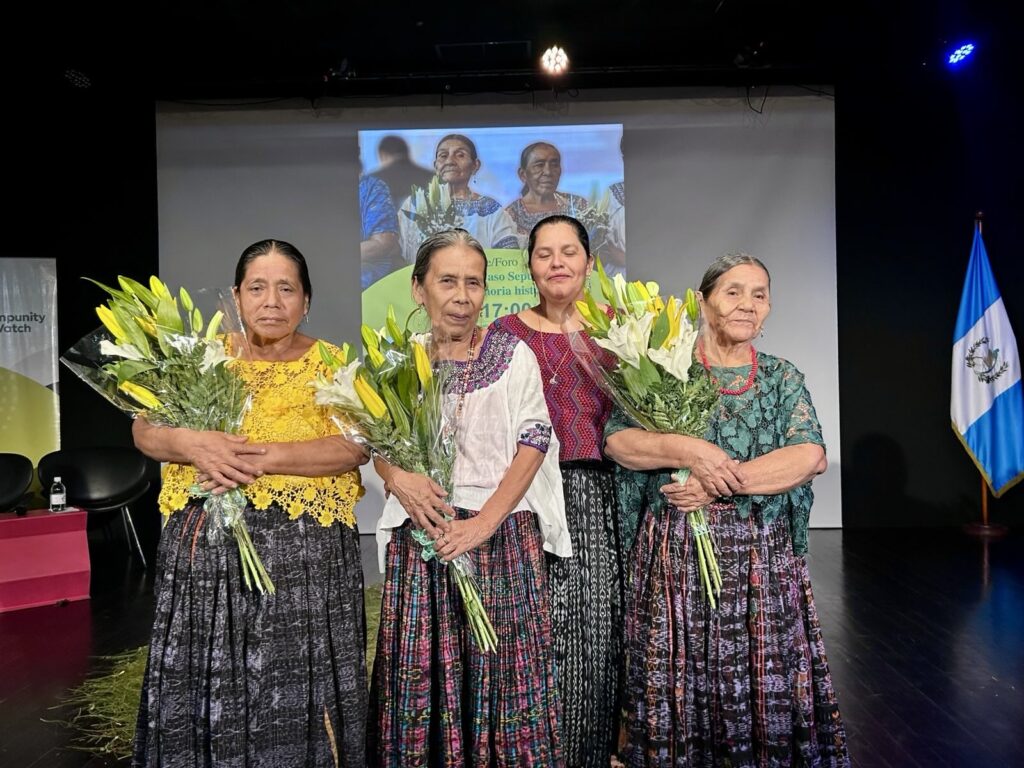
To commemorate the 9th anniversary of the Sepur Zarco sentence on 26 February 2025, we organised the film forum ‘The Sepur Zarco case and its impact on historical memory’. This was a collaboration with the Collective Jalok U’, created by the women of Sepur Zarco, Mujeres Transformando el Mundo (Women Transforming the World) MTM and in coordination with the Cultural Center of Spain (CCE), where the event was held.
Learn more about the Sepur Zarco case
During the film forum, we presented two short documentary films about the reparation measures in the Sepur Zarco case. These contributed to the subsequent discussion of the case’s impact, the advancements, and challenges in the implementation of the reparation measures ordered.
The discussion panel was joined by Demecia Yat, survivor of the Sepur Zarco case and president of the Collective Jalok U’, Paula Barrios, General Coordinator of MTM, Ernesto Flores, General Director of Cultural Development at the Ministry of Culture and Sports, and Gloria Ixpancoc, Deputy Director of Educational Equity of the General Office of Intercultural Bilingual Education at the Ministry of Education.
The event stared with a clip from the documentary created by the Ministry of Education, to recall the reading of the verdict by judge Yassmin Barrios and to name the 15 women that sought justice in this case. This set the tone to recognise each of the survivors that lead this process and relive that historic moment when justice was achieved.
The short films shown were a segment from the documentary elaborated by the Ministry of Culture about the reparation measures they are implementing, and a video produced by Impunity Watch about the graduation of 46 bilingual teachers in Sepur Zarco as a result of the reparation measures being implemented. The video shows how significant it is for the survivors and the community to have broader educational opportunities but also learn from teachers from their own communities. Two of the graduates are grandchildren of the survivors, making it more meaningful to both graduates and survivors. Watch it here (Spanish):
During the panel, Demecia Yat highlighted the lack of state reparations after nine years:
“We don’t want to keep talking about reparations every year, we have waited too long. [Even though] it wasn’t this government that harmed us, it is still their responsibility to implement the reparation measures.”
Ernesto Flores from the Ministry of Culture mentioned efforts like translating the sentence into Mayan languages, creating cultural programs for the survivors and creating a documentary. Gloria Ixpancoc from the Ministry of Education discussed educational improvements and scholarships in Sepur Zarco, while Paula Barrios from MTM emphasised the need for comprehensive and permanent state commitment to reparations, transformative reparation is not just about ticking a box one year, the implementation is a long term responsibility. The event concluded with a recognition of the womens’ bravery and pursuit of justice.