


6 July 2022
In the fourth episode of a four-part podcast series on Syrian activists’ efforts to obtain justice by Justice Visions and Impunity Watch, we discuss the devastating consequences of the Syrian Gulag – a system of prisons spread all over the country.
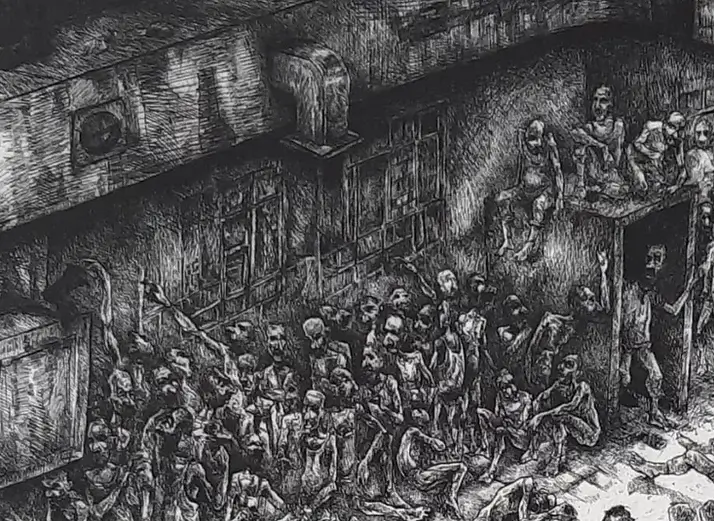
The Syrian prison is the focus of the new Justice Visions and Impunity Watch podcast episode on justice efforts for Syrians. As a central institution of the Assad’s regime’s system of governance, the prison is aimed at destroying political subjects. Mass imprisonment has a devastating impact on Syrian society, as Uğur Ümit Üngör and Jaber Baker demonstatre in their publication The Syrian Gulag, Assad’s Prisons, 1970-2020.
An overview of this gulag, a system of prisons spread all over the country, was lacking so far, despite its omnipresence. Determined to fill that gap, Uğur and Jaber looked into the intelligence agencies that operate, according to Uğur, “like a vacuum cleaner. They penetrate into society and extract people from it. Then they process these human beings by subjecting them to violent treatment, to torture and other forms of interrogation, and keep them in these prisons for a while.”
As Jaber highlights, this prison system has enormous and devastating physical, psychological, social and economic consequences.
“There are hundreds of missing persons in the darkness of this gulag and no one knows anything about them. This breaks up families.”
Imprisonment is a national trauma that has left its traces in the cultural domain, generating a huge body of prison narratives. In her research project SYRASP, Anne-Marie McManus relates the functions of these narratives in the domain of among others literature, cinema and visual arts to different verbs: knowing, remembering and feeling; not only as a form of remembrance but also as political contestation.
“I think actually one of the major goals of the prison field today is to articulate a new meaning, or a set of meanings around imprisonment and enforced disappearance.”
- Uğur Ümit Üngör (PhD Amsterdam, 2009) is Professor of Holocaust and Genocide Studies at the University of Amsterdam and the NIOD Institute in Amsterdam. His main areas of interest are mass violence, with a particular focus on the modern and contemporary Middle East. He is author of 5 books, including De Syrische Goelag: De Gevangenissen van Assad, 1970-2020.
- Jaber Baker is a researcher who specializes in the Syrian prison field and co-author of The Syrian Gulag, Assad’s prisons 1970 – 2020. He is also a filmmaker, cultural and human rights activist, and novelist.
- Anne-Marie McManus is a comparative literary scholar of Arabic, English, and French literatures in the 20th and 21st century (PhD in Comparative Literature, Yale University). She has published on poetics, comparative and theoretical methods, and contemporary Arabic literatures and cultures. She oversees the ERC-funded project SYRASP at the Forum Transregionale Studien in Berlin.