


19 February 2024
Since the signing of the peace agreements in Guatemala in 1996, victims and human rights organisations have made important progress. As a result of the peace of agreements, The Commission for Historical Clarification (CEH, in Spanish) was established. In its report, the CEH stated that there were more than 200,000 victims during 36 years of armed conflict. This includes an estimate of 45,000 disappeared, 669 massacres and other grave human rights violations. The report also recommended the creation of a reparations programme. However, gaps still remain in political will – the National Reparations Program (PNR) ended in December 2023, and did not fulfil its mandate to implement all the reparation measures to reach all the victims.
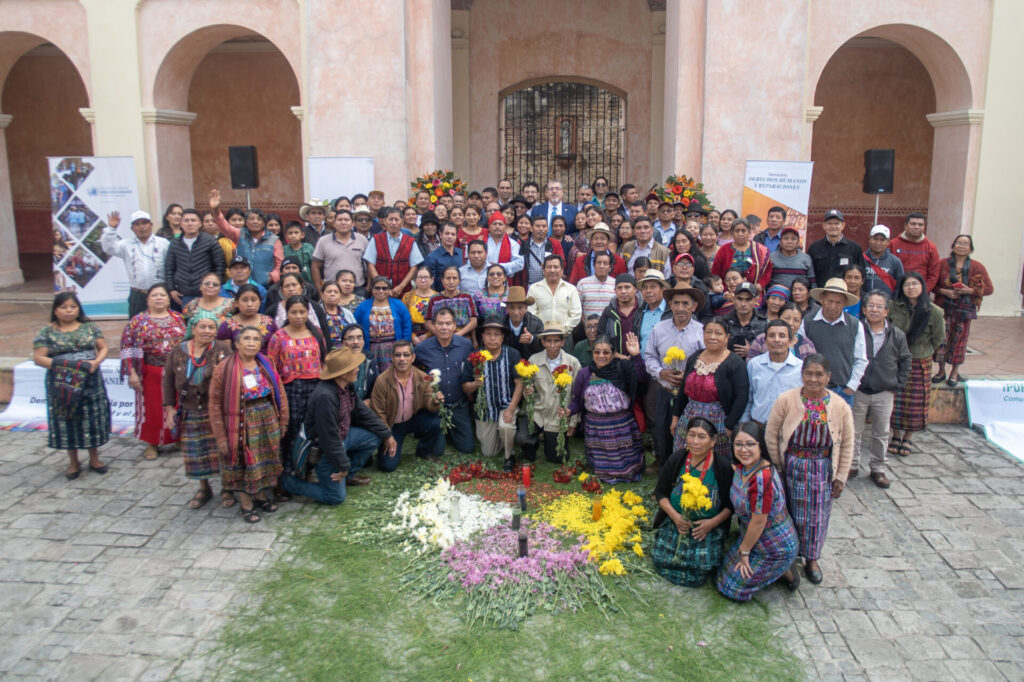
In this context, on 6 December 2023, Impunity Watch, the National Platform of Victims, and the United Nations Office of the High Commissioner for Human Rights in Guatemala (OHCHR) organised the conference ‘Human Rights and Reparations in Guatemala’ to mark the 75th anniversary of the Universal Declaration of Human Rights and discuss the future of reparations. President elect Bernardo Arévalo participated in the event.
The state of reparations in Guatemala
Reparation measures include material restitution, economic compensation, psychosocial reparations and rehabilitation, dignification of the victims, and cultural restitution. This list does not include the guarantee of non-repetition, “which is necessary to ensure the success of the other measures, because it seeks to eliminate the root causes of the violations.”
During the event, Impunity Watch presented the report, 20 years of the PNR: The Impact of the National Reparations Program (PNR) for the Victims of the Armed Conflict in Guatemala. The report highlights the long road that the victims have had to walk in order to ensure respect for their right to reparations. For example, more than 80% of victims have yet to receive reparations over the past two decades. This has led to demands by victim groups for the government to extend the programme for 10 more years. The report also presents recommendations on reparations alternatives for Guatemalan victims.
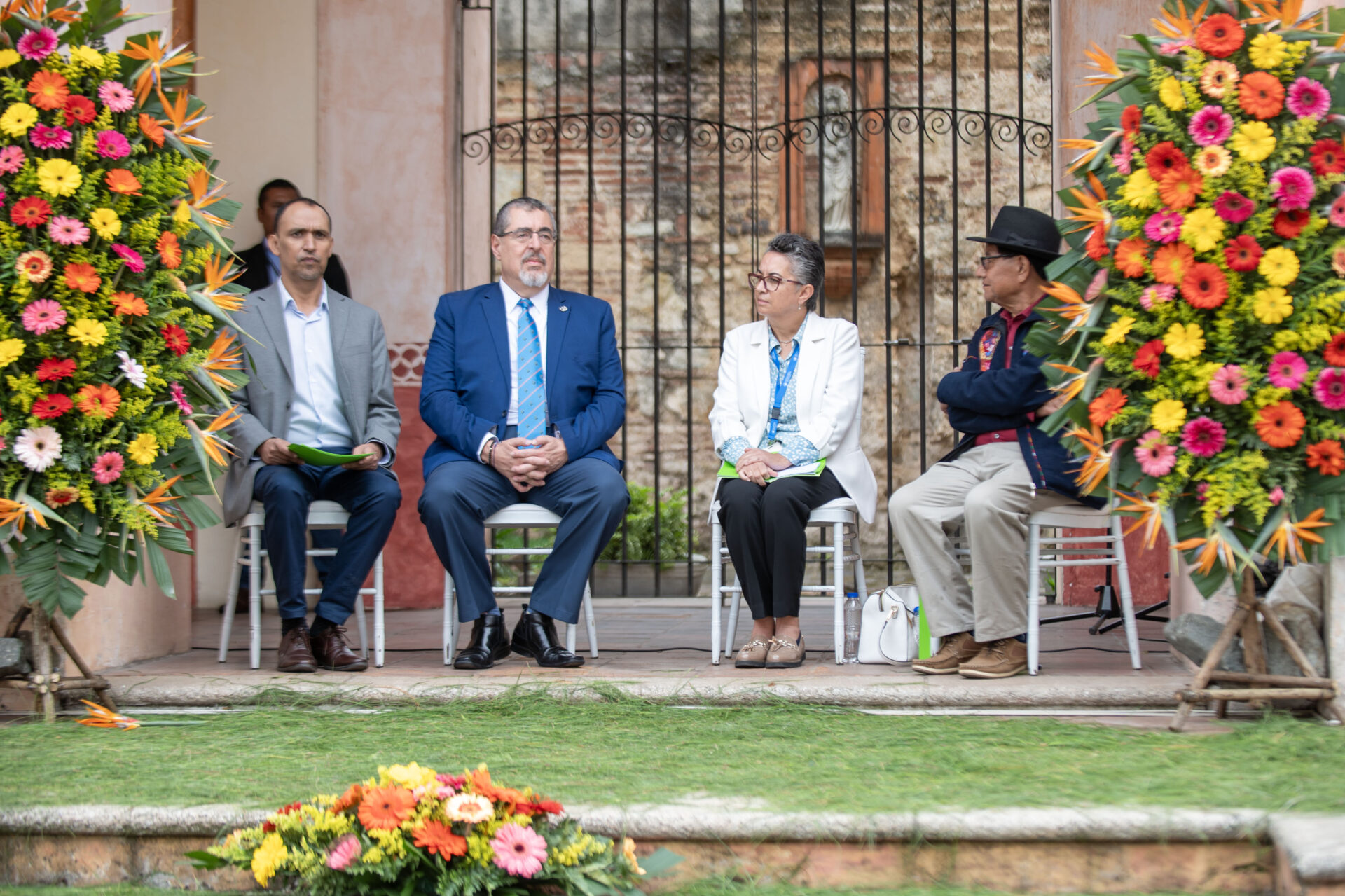
Victims hope President Arévalo will take a different approach to drive forward the PNR and ensure transformative reparations are carried out. During the opening of the conference, President Arévalo affirmed his support, saying that peacebuilding is only possible through the dignification of the victims and impacted communities, and that the State of Guatemala still has a historical debt to the victims and Indigenous peoples affected by the armed conflict. With the ushering in of a new government, there is an opportunity for this process to be strengthened and furthered.
“Reparations programmes should consider that a focus on economic restitution is insufficient. Reparations programmes should not settle for mere financial compensation but should have a transformative aspect, aspiring to overcome the structural inequality that existed before the conflict and could have caused the violence.” –Ana María Díaz, representative of the OHCHR
What do victims want from transformative reparations?
Three panel discussions took place with experts on historical memory, reparations, and the defence of the rights of survivors of sexual violence in armed conflicts.
1. Reparations and the future of the PNR
In the discussion around the challenges and achievements of the PNR, it was noted that the creation of the programme is a credit to the mobilisation achieved by victims, despite a lack of government commitment to the victims’ struggle.
“The PNR was created because of the work of the victims and survivors of torture, massacres, and forced disappearances.” – Juan Pérez Cedillo, member of the National Platform of Victims
Lawyer José González said that victims have the right to be recognised as victims of human rights violations and that transformative reparations cannot be reduced to just giving out money, but also include the reconstruction of the social fabric.
2. Right to truth and historical memory
Ch’umilkaj Nicho, a young singer-songwriter who focuses on sharing historical memory through music, reflected on the obstacles to sharing knowledge of the history of the armed conflict with youth. In many cases, young people do not know the recent history of the country because of their family members’ silence. Many of those family members were recruited or joined the Army, to which most of the crimes committed against the civilian non-combatant population are attributed. She also noted that the educational system does not incorporate this history into the curriculum.
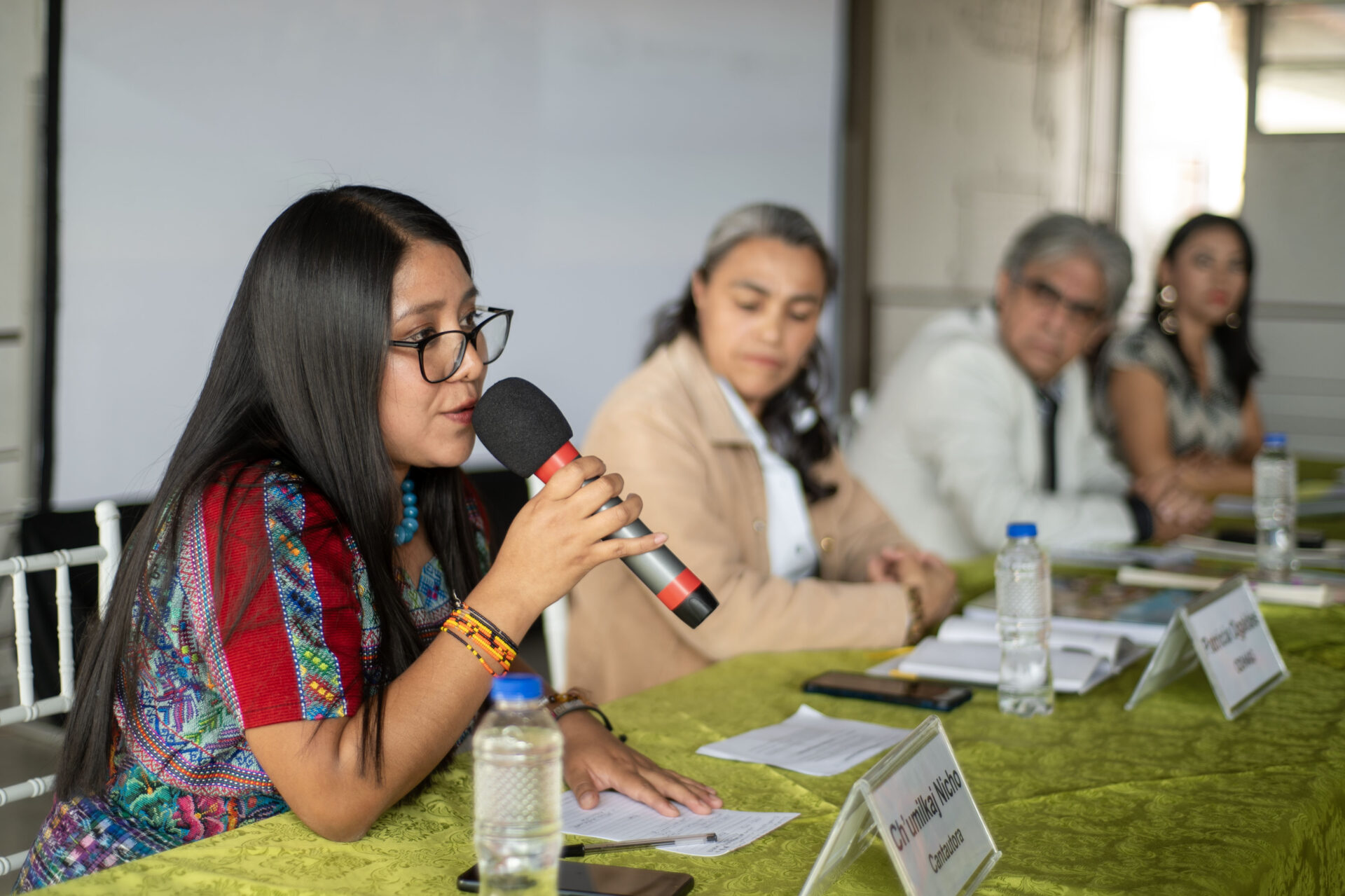
The panel further explored proposals and actions to ensure that historical memory is more widely known in Guatemala.
“In every place there was a massacre or a murder, there should be a commemoration. It is important to remember, to talk about it, to mention it … We are missing the stories of people who lived through the armed conflict, narrating their own experiences and telling us about what they lived through.” – Raúl Figueroa, founder of F&G Editores
3. Transformative reparations for survivors of sexual violence
What about reparations mechanisms for women that survived sexual violence during the internal armed conflict?
This space served as an opportunity to recognise the work of the women that have dared to break the silence and talk about the abuses they suffered during the armed conflict. In the past 10 years, the Sepur Zarco case, the genocide case, the Achi women case, and the Molina Theissen case, have been brought before courts, and all have confirmed the use of sexual violence as a weapon of war. All these cases have placed women at the centre of the demand for justice and the women have faced the resulting confrontation with their aggressors, public exposure, and social repercussions.
Courts have responded to the request of the victims and survivors by granting transformative reparation measures in the cases of Sepur Zarco and the Achi women. The measures granted require the State to provide economic compensation, but also health services for the women and their communities, trainings in human rights for their daughters, granddaughters, great granddaughters, and other survivors of sexual violence, as well as educational scholarships, and public recognition of the crimes through the incorporation of the women’s story in educational curriculum, murals, videos, and documents. The recognition of what the women lived through is also important for the reconstruction of the community’s social fabric.
“They sought to destroy the Mayan people through sexual violence. Considering this fact brings the crimes against the women to a political level… Dignified reparations for the women is the first step toward returning strength to Indigenous communities.” – Aura Cumes, anthropologist and gender expert
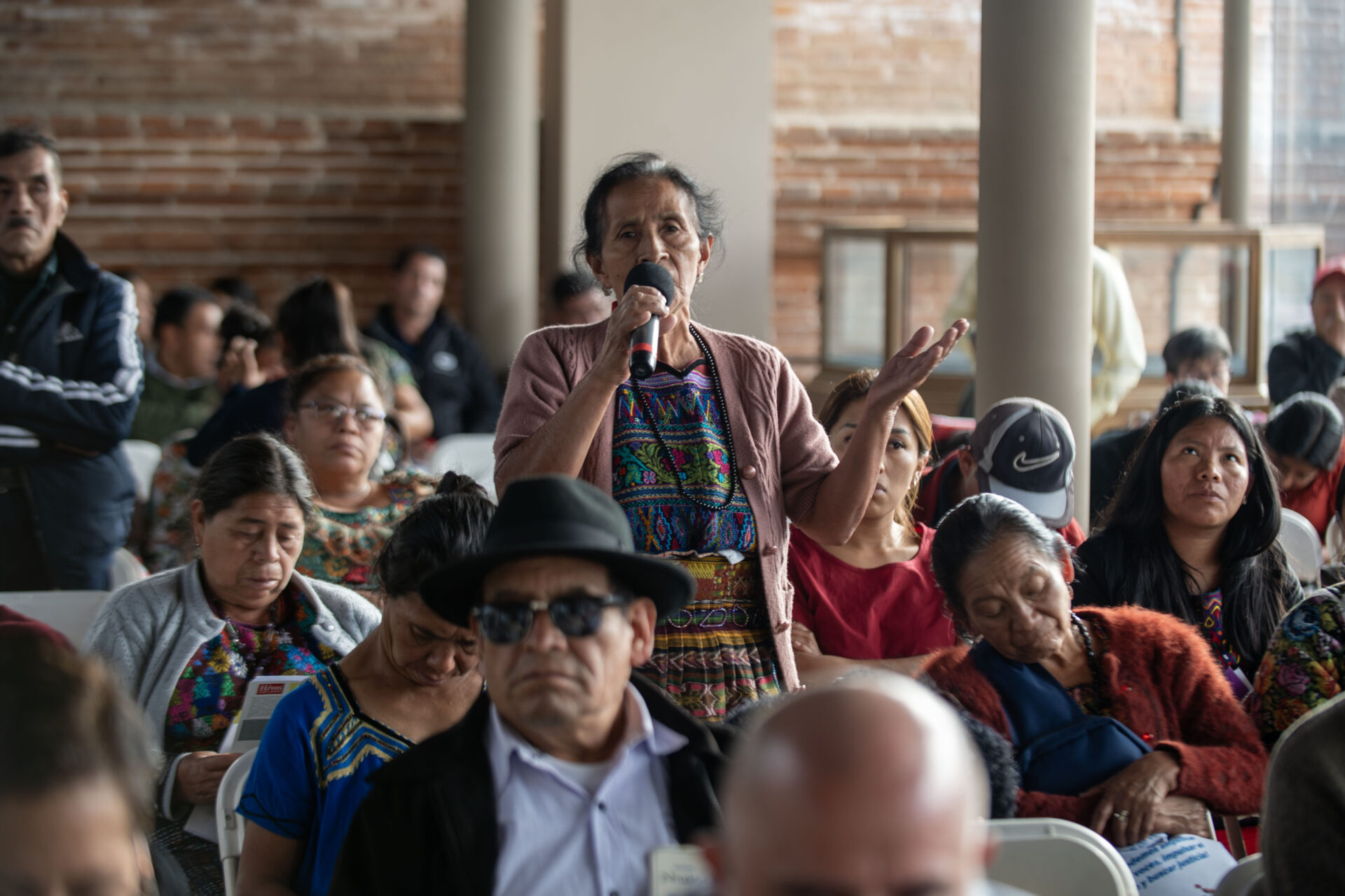
As the conference concluded, victims and survivors understood that their struggle is not over, that there is a lot of work to do and that, despite having suffered for decades, they are not willing to give up because forgetting is not an option.
In closing, Ch’umilkaj Nicho performed a song contributing to the preservation of memory in the Kaqchikel language, titled – Qach’ab’äl (Our Voices): “Yes to memory, yes to truth, yes to life. For our people and their dignity.”
Read our report of the conference in: English Spanish
Learn about our Guatemala work