


4 December 2024
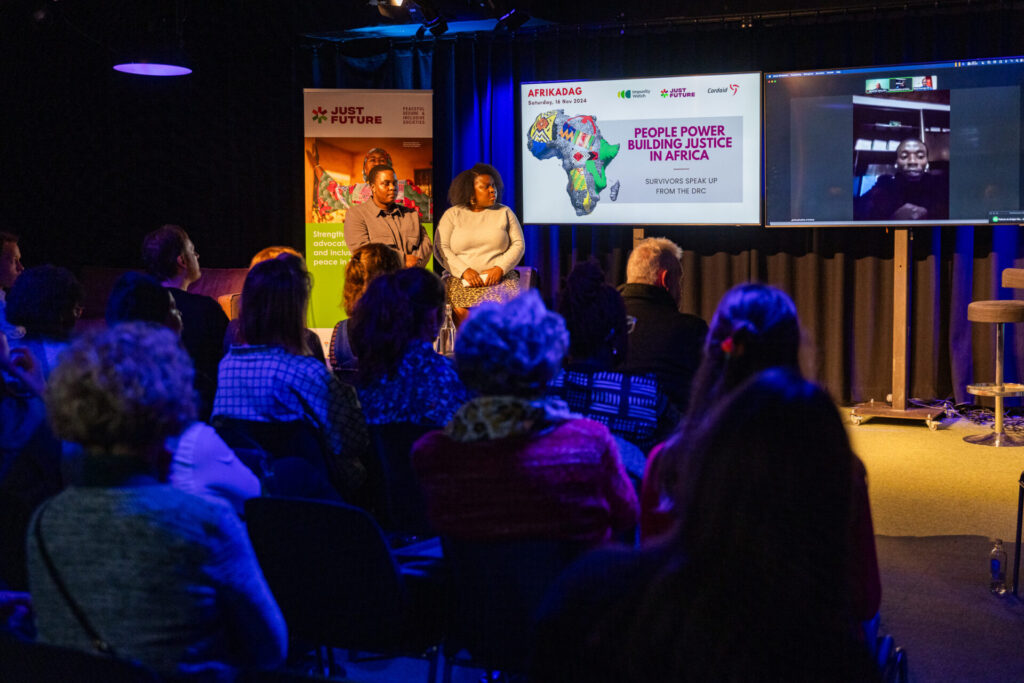
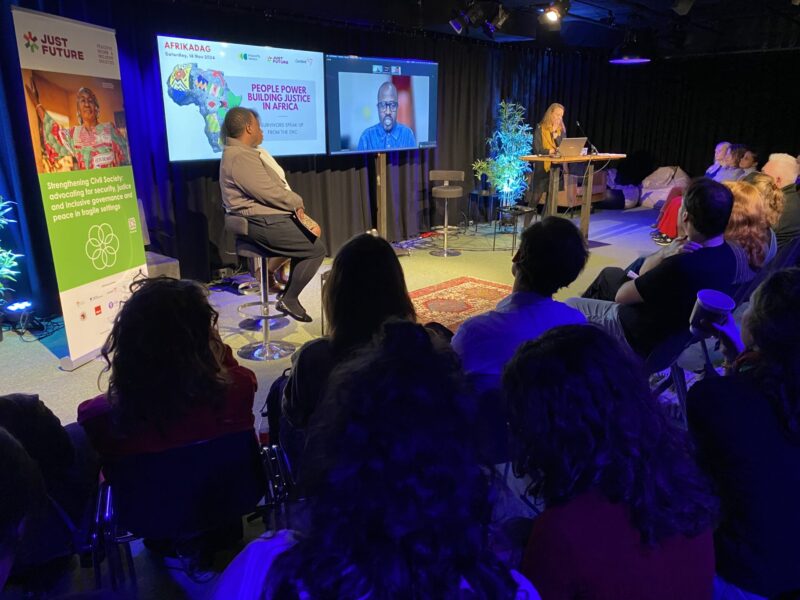
During the 2024 edition of Africa Day, Impunity Watch and Cordaid supported a groundbreaking conversation where victim groups and survivors from the Democratic Republic of Congo (DRC), including the diaspora in the Netherlands, were at the forefront in framing justice for victims of armed conflict in the country.
This milestone in amplifying the voices of victims and survivors in fighting justice was achieved during Africa Day, a key event happening for over 25 years in Amsterdam about international cooperation with African countries.
“Victims are the reason transitional justice comes to life.” –Diavy Kubuya, Committee Secretary of the North Kivu Coalition of Victim Groups, DRC
Why the DRC is a unique transitional justice context
The discussion kicked out with panellists highlighting the fact that the DRC is an atypical and complex context for transitional justice. As Gentil Kasongo, the DRC Programme Manager at Impunity Watch explained, the DRC is not a “post-conflict” context, rather active conflicts remain present especially in the eastern part of the country.
This makes transitional justice mechanisms even more important as it can provide redress for victims and help break the cycle of violence. Given the limited functioning of formal mechanisms in the eastern DRC, informal organising at the community level is vital so that no victims are left behind.
Impunity Watch and Cordaid are working directly with victims on training to raise awareness of their rights, getting victims involved in advocacy work, and promoting victim participation by creating spaces for discussion with policy makers and authorities on their needs and priorities.
What are eastern DRC victims’ expectations of transitional justice?
To contribute to closing an important gap in policy, our joint research with Cordaid on ‘Victim and survivor expectations of the national transitional justice policy in the DRC’ puts victims and their views at the centre of the ongoing dialogue in the country.
The research draws from over 700 testimonies, needs, and aspirations of victims from the most affected provinces – North Kivu, South Kivu, and Ituri – and provides clear calls from those unheard survivors and victims to lawmakers in the DRC. This articulation reflects civil society and INGOs coalition building in those three provinces, allowing for a growing national momentum on transitional justice and the meaningful participation of victims in the process.
Explore the policy brief:
During Africa Day, the Committee Secretary of the North Kivu Coalition of Victim Groups, Diavy Kubuya highlighted that:
“Victims are the reason why transitional justice comes to life. They are the ones who have lived atrocities and abuses in their flesh and their experiences as human beings. That’s why far from being confined in a simple witness role, they are key players and express and speak out and are the powerful voice of the community.”
Watch the full video:
Jules Mbokani, the Just Future DRC Programme Coordinator, additionally emphasised that to continue the crucial work of providing capacity building for civil society and sustaining spaces for grassroots communities to express themselves at all political levels, the Dutch government and the international community must sustain its support for transitional justice in the DRC.
Displaced persons and the diaspora: two crucial perspectives for TJ in the DRC
Farida Luanda, a youth activist with the Global Partnership for Education, moved us with her powerfully personal story of being one of 6.9 million internally displaced persons and refugees from the DRC– one of the biggest displacement crises on the African continent. She made an urgent call to the international community:
“Don’t ignore the cries from the DRC… Engage directly with affected communities – young women, girls, to listen to their voices and accept them as they are, in their own languages. Invest in girls’ education to change the DRC as a nation, for stability, peace and security.”
Carla Kabamba, Amsterdam City Councillor and leader of the Congolese diaspora in The Netherlands, brought the conversations closer to home here in Europe. She emphasised the role that diaspora must play, to continue putting pressure on governments and bring change locally, such as raising awareness of human rights abuses over raw materials extraction and passing laws in Europe to safeguard the rights of people in the DRC.
Summarising the thought-provoking discussion, the moderator Kim Baudewijns, PhD researcher at the University of Ghent emphasised the panellists calls that to “get rights right”, we must:
- Recognise victims and survivors as protagonists in the struggle for justice
- Highlight the necessary support needed from the international community
- Not forget the importance of issues such as education (particularly for women and girls), energy transition, and psychological support
Photo credits: Impunity Watch, Foundation Max van der Stoel