Guatemala

In Guatemala, we help fight systemic impunity and strengthen the demands of victims of the civil war, especially women and indigenous people.

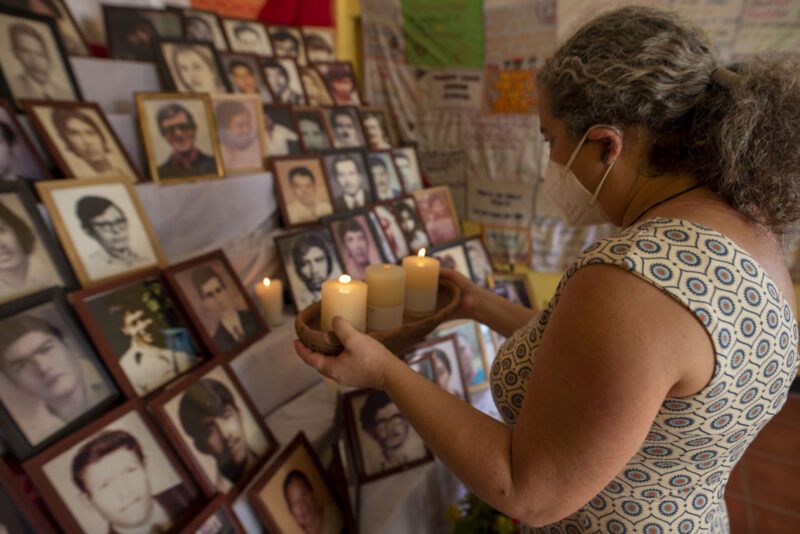
In Guatemala, Impunity Watch works in the aftermath of the civil war (1960-1996) to strengthen the ability of survivors and victims to demand redress and respect for their rights, and participate effectively in transitional justice processes. This includes providing legal, advocacy and communications support around major lawsuits. We also monitor the transitional justice process in Guatemala to alert the international community to developments and promote debate.

We have been working in Guatemala since 2004, as part of a project by Solidaridad – before Impunity Watch became an independent organisation four years later.

Our work in Guatemala focuses on four pillars:

Victim participation

We work to ensure that national, regional and international justice processes are more responsive to victims’ needs and therefore more effective, and contribute to strengthening Guatemalan society.

Independent judiciary

Judicial independence is essential in the fight against impunity, as it helps guarantee access to justice. We support Guatemalan justice actors, including judges and prosecutors, whose anti-corruption and justice work is being increasingly threatened.

Strategic litigation

We support emblematic cases, such as the Maya Achi case, that demonstrate state responsibility for systemic violations, demanding truth, justice and reparations for victims, and promoting transformative measures for non-recurrence.

Gender

We focus on the needs of marginalised groups, especially women and indigenous peoples, and promote a gender perspective in transitional justice processes.

The civil war of 1960-1996 in Guatemala was one of the most violent and horrific armed conflicts in Latin American history. Thousands of human rights violations left deep scars on society. Marginalised groups, including women and indigenous people were most affected, and rape was used widely as a weapon of war.

Despite the signing of the peace accords more than 25 years ago, redress for those crimes has not been obtained and impunity persists. In 2020, the newly elected pro-military President Alejandro Giammattei closed the Secretariat of the Peace in charge of implementing the accords, as well as the Presidential Human Rights Commission.

Since then, officials have been cracking down on dissent, stifling civil society and threatening independent justice actors, making it even harder to seek accountability for past crimes.

Gender-based violence and discrimination against marginalised groups – problems with origins in the past – persist in Guatemalan society.

In spite of this, victims and survivors continue to come together to call for their rights to be respected and for the root causes of injustice to be addressed.

The arrival of a new democratic government in 2024 is an opportunity for change in favour of human rights and the rights of victims. The leadership of Indigenous peoples, and joint actions of civil society, and the international community were key to defending the election outcome.

“The conditions of exclusion, racism and labour exploitation that gave rise to the armed conflict have not changed.”
Impunity Watch logo
Feliciana Macario, CONAVIGUA (National Coordination of Widows of Guatemala)

Latest news from Guatemala

Grassroots voices

The Santa Lucia case

After decades of persecution, intimidation and fear, the families of victims of the ‘Great Sugarcane Strike’ (February 1980) in south west Guatemala are breaking the silence.

Explore how they are seeking justice.

Read more