


15 February 2026
Victims of decades of human rights violations, committed under former regimes in Tunisia, continue to face significant challenges in seeking justice and accountability, from stalled judicial proceedings, to increasing restrictions on civic space.
Despite over 62,000 documented cases of violations by the Truth and Dignity Commission (TDC), public hearings, and recommendations for accountability, reparations, and institutional reforms, many victims — particularly women — continue to experience deep marginalisation. Women victims endure arbitrary arrests, forced exile, torture, sexual and gender-based violence, political persecution, and violations targeting family members, including the confiscation of property and economic disenfranchisement.
Creating spaces for women victims to gather, share experiences, and articulate their priorities is essential for advancing victim-centered transitional justice in Tunisia.
Women victims represent a critical yet underrepresented voice in the struggle for truth, justice, and reparations. Their experiences reveal not only the gendered dimensions of state violence but also the social and economic vulnerabilities that persist long after the violations occurred.
Voices and hopes: Sharing, healing, and strengthening solidarity
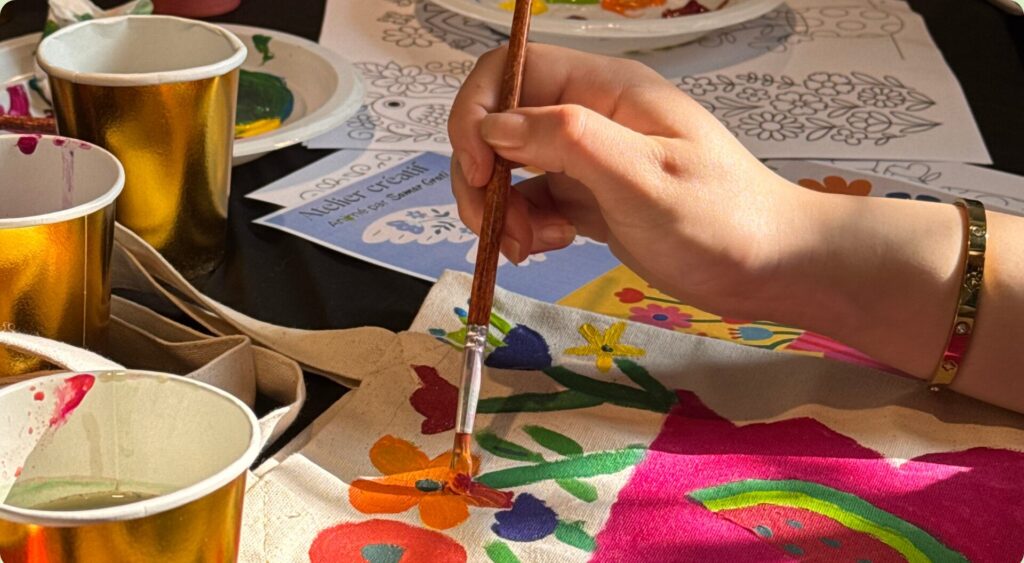
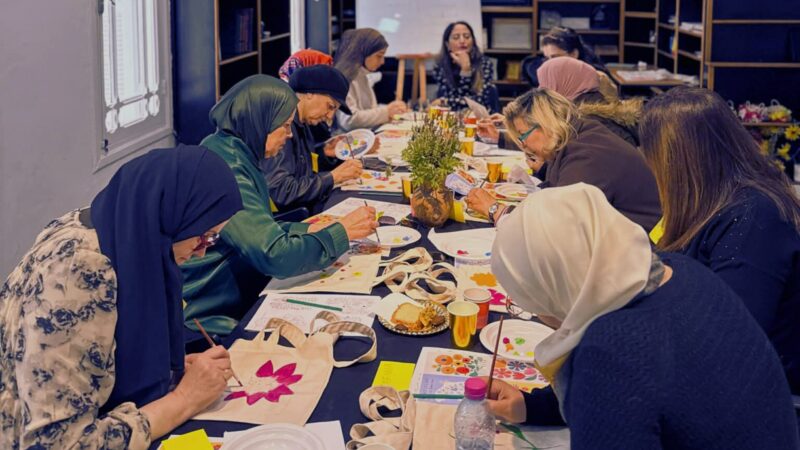
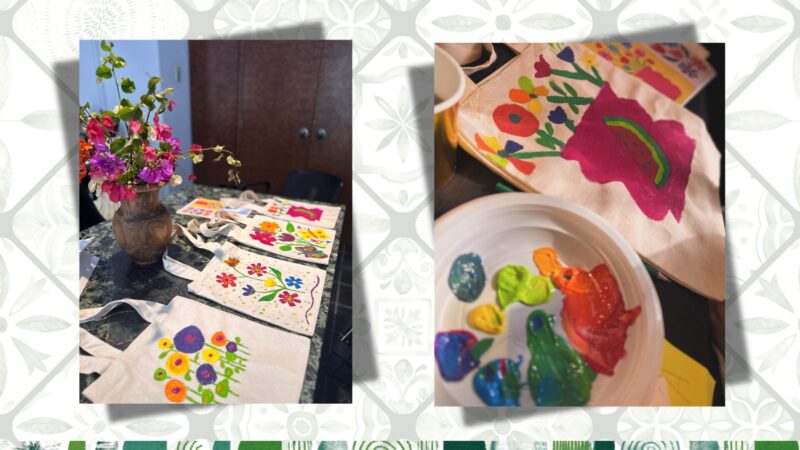
In December 2025, we provided a reflective, trauma-informed, and survivor-centred space to assess the country’s transitional justice (TJ) process and its long-term consequences for victims. During a workshop called ‘Voices and hopes: Sharing, healing, and strengthening solidarity’, discussions centred on survivors’ lived experiences, unresolved forms of harm, and how transitional justice mechanisms have shaped victims’ sense of dignity, safety, and belonging. This reflection was facilitated through creative practices, which often offer safer and more meaningful avenues to explore memory, pain, resilience and hopes for the future.
Report: Preserving memories of victims in Tunisia
The workshop examined women’s experiences of detention, how they have kept memories alive, their survival strategies and their engagement with TJ processes, as well as how their pain has been acknowledged, particularly following the completion of the TDC’s work.
Participants reflected on the violations they suffered during detention and how they were treated during the truth-seeking process. They also discussed how their testimonies were handled and the effect of justice mechanisms on their lives afterwards. The discussions emphasised the importance of feminist memory in achieving dignity, historical truth and long-term justice and the fight against impunity.
The intersectional impact of violations on women victims
At the workshop, participants revealed significant shortcomings in accountability, recognition, reparations and psychosocial support for women victims. Many women victims in Tunisia suffer intersectional discrimination: as women, as victims of state violence, and as individuals from marginalised or rural areas with limited access to education and resources.
Although the TDC’s final report acknowledged these violations, implementation of its recommendations has been inconsistent and fragmented. Reparations programs were delayed or insufficient, official apologies were limited, and initiatives for memorialisation and recognition remain largely incomplete. This has created a sense of betrayal and abandonment among many victims, who feel that TJ promises have not translated into meaningful change.
For women victims, the impact goes far beyond unfulfilled rights. Many continue to face persistent social stigma within their families and communities due to the nature of the violations they endured. Their economic and psychological vulnerabilities often remain unaddressed, leaving them isolated and with limited access to essential support services.
At the same time, their voices remain largely absent from public discourse, decision-making spaces, and national dialogues, further deepening their marginalisation. Today, violations of rights and freedoms continue in Tunisia, and women victims’ voices remain largely muted in public, legal, and political arenas.
This ongoing environment of repression underscores the urgency of creating safe spaces where women victims can share their experiences to be included and represented, articulate their needs for recognition and dignity, and engage collectively in shaping truth-telling, memorialisation, and advocacy efforts.
Reflections from women victims on memory and marginalisation
Women have consistently preserved memories inside and outside detention through smuggled letters, personal belongings, oral testimonies, artistic expression, creative writing, songs, wall inscriptions, religious practices and symbolic objects. These practices functioned both as coping mechanisms and as deliberate acts of resistance against erasure and denial. At the same time, the TDC’s final report was perceived as failing to adequately reflect the experiences of women, gender-specific harms or the structural violence that shaped their lives before and after detention.
Secondly, the impact of detention does not end upon release. While many women maintained relationships formed in prison and built informal support networks, they also experienced deep frustration, social isolation, economic precarity and psychological distress.
Children were identified as being among the most affected and least recognised victims, experiencing lasting trauma, yet remaining absent from formal documentation and reparations frameworks. Motherhood and childbirth were described as acts of defiance against systems that sought to destroy women’s bodies, futures and social roles.
TJ processes often reproduce existing inequalities, further marginalising women through exclusion from decision-making spaces, limited recognition of gender-specific harms, and retraumatising procedural practices. For example, official documentation and memorialisation efforts are largely dominated by male perspectives and individualistic accounts of harm. Women’s experiences were treated as secondary or invisible. Furthermore, many survivors felt that their testimonies had been collected in an exploitative and retraumatising manner, with limited psychological support, inadequate follow-up and a lack of clear communication regarding how their statements would be used or protected.
The Tunisian case demonstrates that the termination of formal transitional justice mechanisms does not necessarily result in justice being served. Legal cases against perpetrators, including prison guards, have stagnated for years, while many detainees remain imprisoned without legal clarity. Victims’ limited participation in public hearings and decision-making processes further undermined trust in institutions.
Consequently, participants described a sense of widespread disillusionment, fear and political withdrawal, as well as the feeling that repression is returning in new forms. Many survivors felt abandoned by the state and international actors once the truth commission had concluded its mandate.
Ways forward for inclusive justice and cross-contextual exchanges
Women victims emphasised that, following the end of the formal TJ process and in the absence of effective accountability and recognition, justice for many women continues primarily through informal, community-based and survivor-led practices.
Establishing women’s networks and survivor-led documentation are central to this informal process. Memory preservation through writing, oral testimony, artistic expression and digital archiving are means to safeguard dignity, prevent erasure and establish a permanent feminist narrative beyond official reports. Women-led documentation and memory spaces should be sustained and connected to support long-term solidarity and narrative ownership.
Women must remain at the centre of these processes as knowledge holders and political actors, not just as victims.
Most participants expressed a keen interest in engaging with Syrian women survivors and activists to share experiences and reflect on the Tunisian transitional justice process in relation to future transitional justice efforts in Syria.
Cross-contextual dialogue and exchange are essential in order to identify harmful practices to avoid, effective approaches to replicate, and ensure that women’s experiences, priorities and memory work meaningfully shape transitional justice processes in Syria, rather than remaining marginal or merely symbolic.