


28 March 2025
Gender norms remain very traditional in Burundi, rooted in a dominant patriarchal culture. Inequalities between men and women are reinforced by a legacy of violence resulting from cycles of conflict. Efforts to rebuild a more egalitarian society repeatedly come up against the persistence of violent masculinities – models of domination limiting not only the development of women, but also that of men. Transforming masculinities is crucial to break persistent cycles of violence, and to bring women in from the margins of decision-making processes, particularly in politics.
In its Burundi programme, Impunity Watch is pursuing strategies to transform social relations and deconstruct stereotypes underpinning traditional gender identities. These include actions promoting positive masculinities and women’s political participation, such as the “Twuzuzanye (Let’s build each other, together)” project. This project was implemented in the provinces of Bujumbura, Cibitoke, Makamba, and Muyinga in partnership with Dushirehamwe, Solidarité pour la Promotion des Droits Humains (SPDH), and Yaga, with financial support from the Belgium government.
Women’s political participation: A catalyst for change
The patriarchal structure in Burundian society severely marginalises women, reducing many women to second class citizens and isolating them from economic and political life at the community level, thereby increasing their vulnerability to gender-based violence. The consequences are manifested at all levels: women face difficulties when attempting to participate in decision-making processes in the private and public sphere, including obstacles erected to prevent them from claiming their rights to improve these conditions.
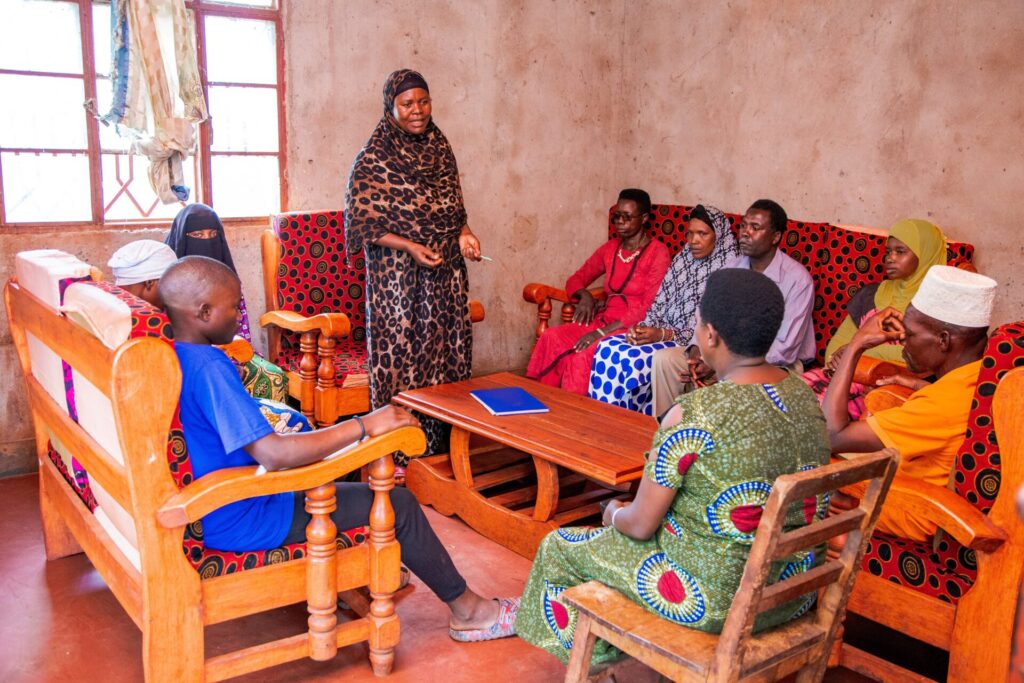
To combat such dynamics, Twuzuzanye facilitated capacity-building for women living in rural areas of the four provinces on leadership, civic education, advocacy, communication, and public speaking. Participants organised exchanges between provinces to understand the needs of Burundian women on issues of national importance. Armed with their new skills and recommendations from their community, the women leaders succeeded in leading policy forums at the provincial and national levels. These forums opened space for women to advocate for solutions to community problems directly with the authorities.
Through these endeavours, the women leaders broke down traditional barriers preventing them from actively participating in community and political life. Some were even subsequently elected to various community leadership positions. The women became role models for other women in their communities, who in turn got increasingly interested in participating in community life.
“Faida [a woman leader coached by the Twuzuzanye project] has been my mentor and inspiration. Her support gave me the confidence to dare, to believe in myself, and to face any challenge, even against men. She taught me that the first victory is to know you can make the difference.” —Shadia Nininahazwe
-
- Faida, a woman leader in Burundi who received training under the Twuzuzanye project
-
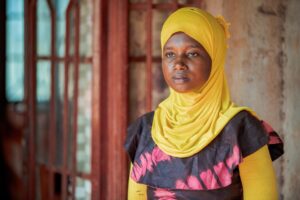
- Shadia Nininahazwe, pictured here, talks about the community impact of the Twuzuzanya training
In parallel to the work of the women leaders, the project’s civil society strategy strengthened the capacities of 230 community focal points and more than 470 participants in training on women’s political participation. Together, these initiatives have changed perspectives on women’s leadership among local actors: 88% of indirect participants affirm the positive contribution of women in local reconstruction processes.
As the country moves towards parliamentary and legislative elections in 2025, this impact is critically important for women’s political prospects.
Transforming masculinities by strengthening youth resilience
In Africa as elsewhere, analyses converge on the mobilisation of young people, particularly young men, to take a leading role against violent conflicts. This dynamic is even more acute in identity-based conflicts, building on attributes and social roles traditionally ascribed to men including the use of force and duties as protectors. Yet in post-conflict reconstruction efforts, little attention is given to deconstruct these patterns of violence developed during conflict.
The Twuzuzanye project thus implemented a strategy enabling young people from different communities and political parties to meet, discuss, and identify the root causes of conflicts, thereby strengthening their resilience to manipulation through knowledge and awareness. The youth had space to collectively analyse experiences of conflicts and participate in intergenerational actions to develop mutual understanding of the suffering of groups other than their own. Young people created initiatives among themselves regardless of political affiliations and collaborated in reconstructing the social fabric, which for some of them was not easy to begin with.
“I understood that political violence is useless and by sharing this understanding with other young people I helped create a more peaceful environment. Today, I am part of the associations that bring young people from different parties together, proving that collaboration is possible.” — a young person affiliated with a political party
A strategy with similar objectives was implemented online. This led to more than 190,000 young people directly engaging with online content addressing identity-based manipulation and violent masculinities — with over 10 million people reached via social media impressions. According to Impunity Watch’s surveys, 89% of participants confirmed that they have changed their attitudes towards masculinities thanks to the initiative, and 81% of young people attested being more resilient thanks to the understanding of political manipulation they developed via Twuzuzanye.
This initiative has therefore directly contributed to promoting positive masculinities and dealing with the past among young people at an important moment in Burundi’s history.
Investing in the reintegration of ex-combatants: A step towards rebuilding peaceful communities
Ex-combatants face many challenges in reclaiming their community life and fully integrating into society after disarmament, demobilisation, reintegration and reinsertion (DDRR) processes that often failed to give due importance to mental health and psychosocial support (MHPSS), and at times even exposed them to instrumentalization in political and electoral violence.
Read: 5 strategies to prevent future violence
To contribute to their reintegration and respond to those challenges, we collaborated on an innovative MHPSS approach with 100 ex-combatants from various former rebel groups and ex-Burundian armed forces, including training sessions on civic education. This strategy enabled the group to develop new perspectives on their lives and those of their communities, to get involved in community projects, and to forge new connections with their families and communities while promoting collective and community well-being.
In feedback provided to Impunity Watch, 93% of the ex-combatants reported a significant reduction in their mental health symptoms, and testimonies from their families and communities confirm positive changes in their social relationships.
“Before the Twuzuzanye project, I was an irritable and violent man, towards my wife, my children, and those around me. The training on positive masculinities opened my eyes: it all starts at home, in the way I behave with my family. Today, before acting, I take the time to talk to my wife. Violence no longer has a place in my life, neither at home nor at work. Those around me have noticed my change and I’m proud of it.” — ex-combatant.
According to the testimonies of ex-combatants, this was the first opportunity since their return to civilian life for them to participate in efforts to support them to have “a normal life” and develop values of tolerance. Although the deconstruction of militarised masculinities reinforced by war takes time, levels of exposure and understanding within the group have improved significantly.
The efforts of Impunity Watch and our partners through the Twuzuzanye project have led to significant changes within the target communities, but there is still a long way to go. For the transformation of gender relations and patterns of violence to be fully established, it is crucial to pursue other concrete and appropriate actions, to join forces with diverse stakeholders, and to strengthen the commitment of each actor.
Learn more: Our work in Burundi