


3 September 2024
On August 22, Impunity Watch, the Association for Justice and Reconciliation (AJR) and the Human Rights Office of the Archdiocese of Guatemala (ODHAG) held the forum Voices against Forgetting: The Ixil Genocide in Guatemala, in Guatemala City.
The event was organised to mark the 25th anniversary of the presentation of the Guatemala Memory of Silence report by the Commission for Historical Clarification (CEH), while also highlighting recent developments in the Ixil genocide trial against former military Benedicto Lucas García, brother of former dictator Romeo Lucas García (1978-1982).
Read a Spanish summary of the Ixil case
The relationship between racism and genocide
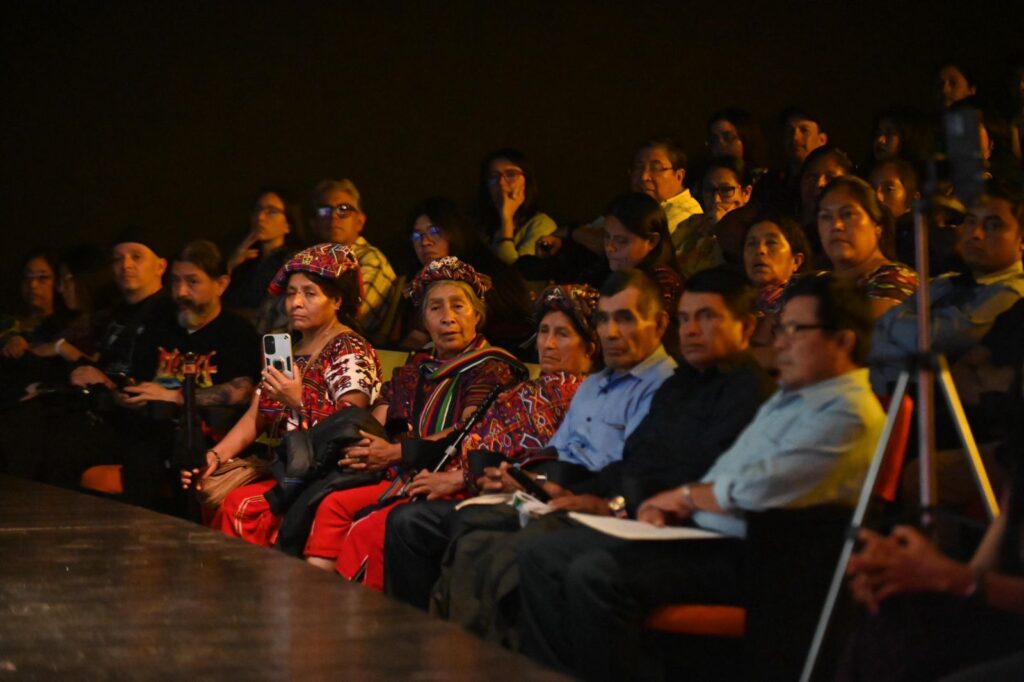
During the forum, participants discussed the relationship between racism and genocide, the importance of justice for victims and survivors, and the need to involve young people in preserving historical memory. More than 150 people participated in the forum, including victims and survivors of the armed conflict, members of civil society organisations, students and the general public.
Denis Martínez, director of the Impunity Watch office in Central America, gave the welcome speech. As he recalled, the CEH concluded in 1999 that acts of genocide were committed against the Maya people of Guatemala during the internal armed conflict. Shortly after the CEH report was published, the victims and survivors filed the first official complaints for genocide, yet the first Ixil genocide trial was not held until 2013, when former dictator Efraín Ríos Montt (1982-1983) was convicted. Martínez said, “Both in the trial against Ríos Montt, and in the current trial against Benedicto Lucas, the AJR has played a fundamental role because AJR members have moved both processes forward.”
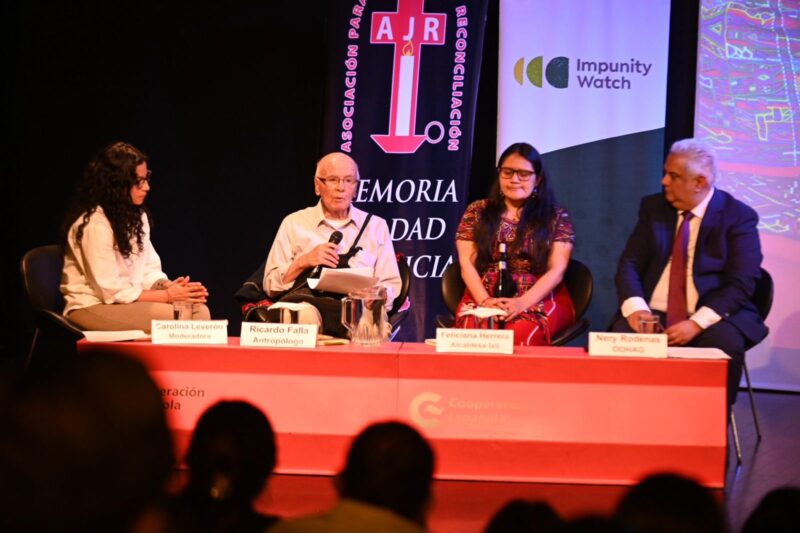
Priest and anthropologist Ricardo Falla talked about the structural causes of the genocide that persist today:
“The genocide arose in a context of repressive violence carried out by the army, which saw Indigenous people as a threat to its interests. Because of racism, the repressive violence escalated to the level of genocidal violence.”
Feliciana Herrera, the Indigenous mayor of Nebaj and a relative of victims of the Ixil genocide, explained that “racism is one of the main reasons that Ixil communities were massacred during the armed conflict,” even though, as an excuse, the army often states that the Ixil people were complicit with the guerrillas. She said:
“Part of our struggle is to eliminate racism and hatred against our people.”
Nery Rodenas, director of the ODHAG, talked about the significance of the Ixil genocide trial against military officer Benedicto Lucas. He explained that the investigation of the case took more than 15 years. Investigators documented 34 massacres, 44 forced disappearances and 30 acts of sexual violence, and registered 1,296 victims, including men, women and children. Rodenas stated, “the accused’s participation in the events has been sufficiently proven. That is why 844 deaths are attributed to him. There are testimonies, expert reports and other evidence that demonstrate his responsibility.”
Background of the Ixil genocide trial
The trial against Benedicto Lucas opened on April 5 and has continued for more than four months. The former military officer is on trial for his responsibility in the Ixil genocide and other crimes against humanity while he was chief of the army’s General Staff between 1978 and 1982, during the military dictatorship of his brother Romeo Lucas.
More than 1,200 victims have been identified in the case, including women, children and elders. The trial is expected to continue over the coming months due to the large number of witnesses, expert reports and documents that have been submitted as evidence.
Explore our work in Guatemala