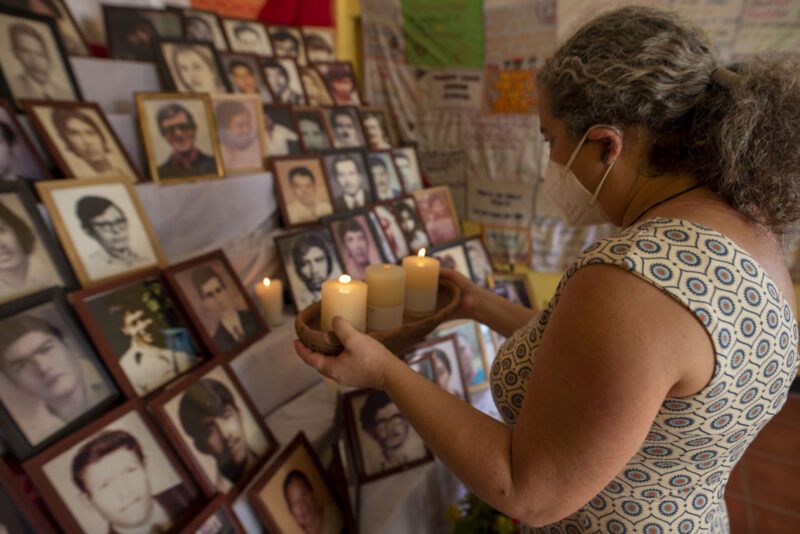
The civil war of 1960-1996 in Guatemala was one of the most violent and horrific armed conflicts in Latin American history. Thousands of human rights violations left deep scars on society. Marginalised groups, including women and indigenous people were most affected, and rape was used widely as a weapon of war.
Despite the signing of the peace accords more than 25 years ago, redress for those crimes has not been obtained and impunity persists. In 2020, the newly elected pro-military President Alejandro Giammattei closed the Secretariat of the Peace in charge of implementing the accords, as well as the Presidential Human Rights Commission.
Since then, officials have been cracking down on dissent, stifling civil society and threatening independent justice actors, making it even harder to seek accountability for past crimes.
Gender-based violence and discrimination against marginalised groups – problems with origins in the past – persist in Guatemalan society.
In spite of this, victims and survivors continue to come together to call for their rights to be respected and for the root causes of injustice to be addressed.
The arrival of a new democratic government in 2024 is an opportunity for change in favour of human rights and the rights of victims. The leadership of Indigenous peoples, and joint actions of civil society, and the international community were key to defending the election outcome.